Women’s History Month, 2026

March is almost over after fickle weather of snow, rain and one day–a balmy 72. Time to post before March ends.

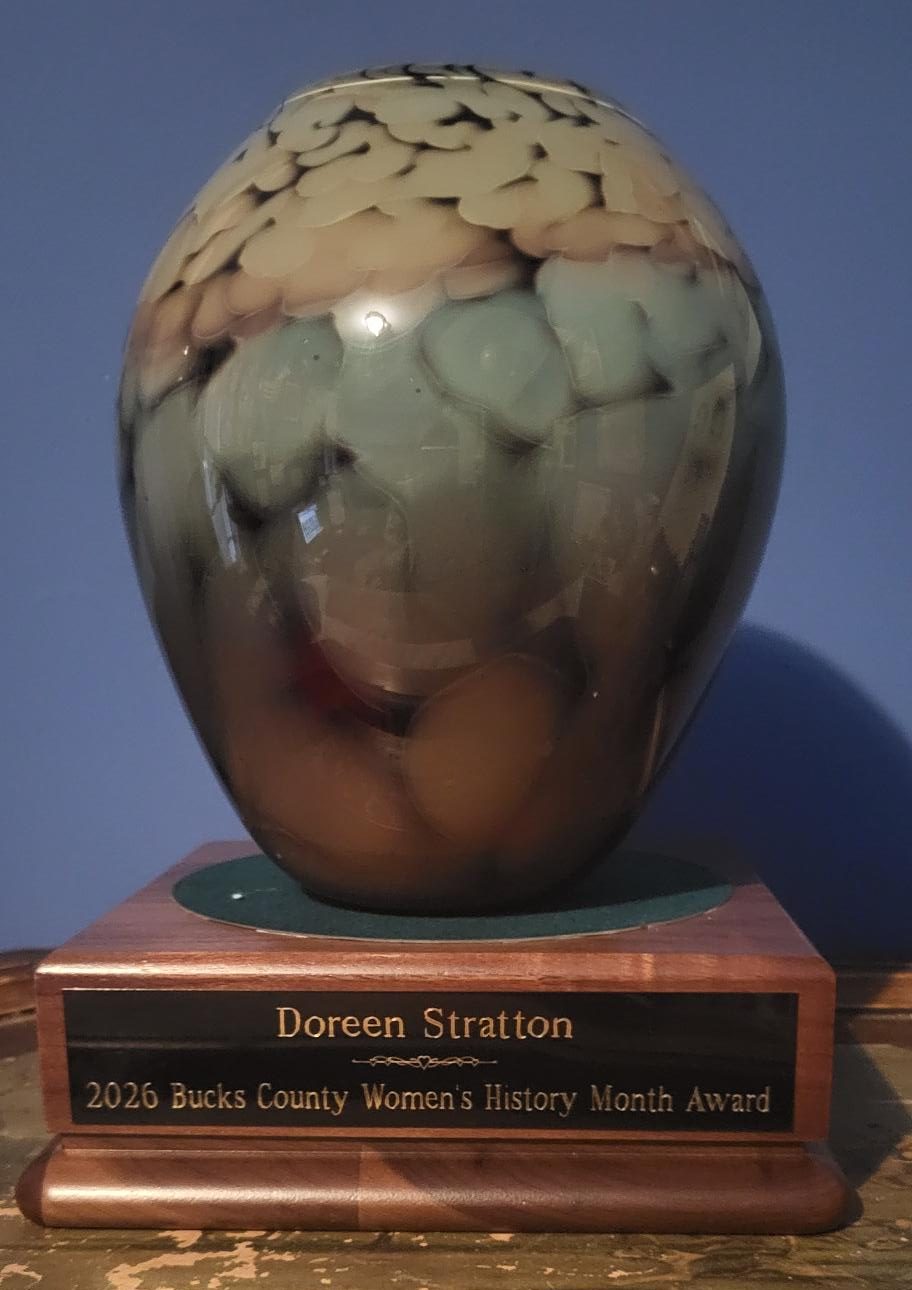
Every March since 1982, ten women’s organizations across Bucks County select ” … a woman who best exemplifies the social, intellectual and creative contributions women have made to our future …”.

The Bucks County League of Women Voters is one of the ten. This year, the League–through Jean Weston, a member of the League, had nominated me to become the recipient for 2026. It was my honor to share my remarks from the Thursday, March 19, 2026 ceremony at the James Lorah House in Doylestown.
******

Thank YOU, Maggie Wallace-Cullen for that introduction.
Maggie is my daughter from another mother.

Thank you, League of Women Voters of Bucks County for the nomination, and Jean Weston of the League for nominating me.

Kathleen Horwatt? Ashe oleng (it means thank you very much in Maasai). Kathleen oversees this annual event which raises women high in the sky.

My appreciation to Tara Tamburellao, for the poem in my honor. Yes, l am honored to receive the 2026 Bucks County Women’s History Month Award.

First, I’d like to introduce my family. I’m one of six siblings.

My oldest sister, Barbara, was unable to travel from Delaware. As was my brother Chris. Barbara and Chris are Central Bucks High School Hall of Fame recipients. My oldest brother Jim passed away in 2017.

My brother John is here. John is also a recipient of the central bucks high school hall of fame. In 2008 he was honored for baseball. There were multiple Doylestown boys who had learned from John the art, skill, and joy of baseball. Read more about my brother on my blog, the Bucks Underground Railroad, of June 17, 2020: “Black Dreams Matter”.

My sister Judith is here—Introspective, Judith surprised all of us by moving to New York City. One day she took a bus ride to Central Park and discovered a love of horseback riding. It takes a strong-willed woman to saddle and control a 1500 plus pound animal.

She like me, returned to Doylestown. Judith is a member of the via and a docent for the James Lorah House. She is a Penn State Master Gardener and the Coordinator for the Doylestown community garden.

My two California born children—Mark Jackson and Mélanie Spelts.

Melanie is an equestrian trained by Judith. Then, she trained her two daughters—Aleeya and Gracyn. Now my great-grandaughter Audrina–at age 6–has begun winning equestrian ribbons. Work schedules kept them from attending tonight.

Finally, I must give Mélanie a proud shout out for beginning her fifth year in recovery.

Mark could not be here. Mark shares videos of rebuilding classic cars from their frames. His wife Christine is a Souderton high school physics teacher. Often, they fly to California for visits to Mark’s uncle, Reggie Jackson.


My remarks tonight . . . Are there any women?

After I came home in 1975, I think those ten years in California had prepared me for this long journey in activism. Three years later—1978—I carried an anti-nuke sign, protesting the three-mile island nuclear power plant accident. Our feisty group was called the Central Bucks Clean Energy Collective. And our slogan? No Delaware Water to Limerick.

It was also a time I began writing and volunteering on political campaigns. In 1983 I was offered a position in the Doylestown District Office of Congressman Peter H. Kostmayer. Just a year earlier, you may remember the National Vietnam War Memorial was dedicated in Washington, DC. That event inspired veterans across America to construct memorials and monuments within their communities. BUCKS COUNTY WAS ONE OF THEM.

Near the end of 1983, our congressional office was asked to assist the County Memorial Committee. Our task was to verify Bucks County names that had been killed or missing in action in the Vietnam War.
My assignment was to research local newspaper archives, contact veteran groups and families of deceased service members. I savored this assignment. My 2nd husband was a Vietnam War combat veteran.

When I received a name killed or missing in action, I called the archives in Washington, DC. They would check the master list of names on the wall and if there was a match, we had a name to etch on our wall. This project made me curious. . . . Were women casualties etched on the wall? During one of my calls to the archives, I asked, “are there any women on the wall?”

“Yes”, he answered, “There are eight of them. Would you like the list? I’ll send it to you.”

Who were the eight names? How come I’d never heard of them? I had followed the war and now I wondered . . . How could military service women die in the Vietnam war? Where was the coverage?
True, it was an unpopular war. Casualties coming home in coffins. However, I was aware women served in the military. Some resided on the family compound where i lived with my first husband near Travis Air Force Base.

Years later, I would learn that during the Vietnam War, possibly 10,000 women—nurses, air traffic controllers, communication specialists, and civilians had served in-country.

When ‘The Wall’ was dedicated, many veterans had reacted negatively: “It’s just a gash in the ground!”. Eventually it would be embraced by the men and women that traveled there. My first time at the Wall, I stood on the rise. The granite “V” is nestled in Mother Earth. Maya Lin’s minimalist design is beautifully powerful. To me, the wall is a female nurturing the souls of all who visit, and all who died.

I witnessed veterans standing on the rise. For lengths of time, they stared at the wall. In silence. Weeping. Some hesitated. . . . Not yet ready. Others walked across the grass down to the Wall. And hands, fingers . . . Touched the names.

In 1993 a memorial was dedicated to women of the Vietnam war. Sculpted by Glenda Goodacre, the monument, on an area above the wall, encircles three women and a wounded soldier. They scream at the heavens as they heal and protect the rescued warriors.

So, you ask, who are the names

When the names of the eight women arrived, it was on one sheet of paper. All were officers and nurses. Seven had served with the Army Nurse Corps. The eighth woman, with the Air Force Nurse Corps. The list also included two male Army Nurse Corps officers.

The causes? Eight deaths included two male nurses caused by aircraft accidents. The other two deaths?—one died from a rocket that hit her hospital—and the other from a subarachnoid hemorrhage.
Seven of the women were my age—give or take two years. The eighth nurse had served in World War II, Korea, and Vietnam.

I dove into research. Newspaper clippings from their hometowns brought these women to life. I asked myself: what should I do with this information? By then I was an accomplished closet writer. Stuck in a cabinet were my journals, a one-act play, three short stories, several essays, and a work-in-progress novel.

If I wanted to write about any of these women, i must first gain approval from their families.
I called and introduced myself and said, “I want to write about your daughter.”
Early in this project, I had met my first two women veterans—both had served in Vietnam. We became friends: Grace Moore–a combat nurse. Denise Black—a unit supply clerk

In 1986, my research led to an article placed in The American Journal of Nursing. It was the first time all ten Vietnam military nurses had appeared in a single publication.

Researching, interviewing and writing while employed was my challenge. A project of this depth required the resources of time and money. After the AJN article, the National Vietnam Veterans of America placed a notice in their national newspaper. Soon, I began receiving responses from combat nurses and infantrymen. Sometimes I succeeded in interviews; other times nurses were not ready to revisit that passage of their lives.

However, those instances when combat nurses gathered at veteran events or ceremonies, I witnessed a sisterhood of women. They acknowledged there were shared experiences which we could never comprehend. They had returned home, with lost innocence; aged beyond their twenty-something years.
My project about women veterans lasted a decade. Letters, phone calls, interviews and travels to their homes resulted in three drafts of mini biographies. I traveled to Scranton Pennsylvania, to New Jersey, to north and South Carolina, to Massachusetts and several visits to the Vietnam wall in Washington.
I failed to travel into Ohio, Indiana, and Michigan, the homes of the other nurses.
Each of the three drafts are under 200 pages.


–2nd Lt. Carol Ann Drazba, Pennsylvania
–2nd Lt. Elizabeth Ann Jones, South Carolina
–2nd lt. Pamela Dorothy Donovan, Massachusetts

If any are interested, I’ve brought reprints of the AJN article.

In 1989, I was asked to edit the Pennsylvania VVA Newspaper. For the next three years I interviewed, photographed, edited, and laid out the monthly newspaper which was sent to veterans and supporters across the Commonwealth. As the paper’s editor, I had an assignment to attend the Pennsylvania VVA when they met once-a-year inside a state maximum security prison. The National VVA Charter supported veterans who were incarcerated. They realized many veterans’ tours led to unlawful activities.

That introduced me to prison advocacy and ended my VVA activism. In 1994 I founded The School of Hard Knocks, Inc, a non-profit youth- at- risk intervention corporation.

Other evolutions of my activism continued.

It was 1999 when I discovered the depths of my African heritage. I had traveled to Ghana and a year later, Egypt. My journey continued when, in 2005, I met two amazing women. Two are here this evening. Phyllis Eckelmeyer, one of the two co-founders of the Maasai Cultural Exchange Project, Inc is here with Alice Sparks. We traveled to Kenya in 2015. Over several years, community donations from Bucks County citizens funded seven water wells. Now, potable water is available for a Maasai village of 5,000 people.


Another mission of MCEP was women. The NGO we collaborated with encouraged empowerment for their women. The organization also promoted education for Maasai children. Over 100 Maasai students were able to attend school because people wanted to sponsor a child. Some of the students have attained college degrees and have taken their knowledge back to the village.

In 2015, on my second sojourn to Kenya, I met 5-year-old Lisa. I decided to sponsor her education. Every year, my donation of $150.00 has carried Lisa into every grade. She has now matriculated into grade 10 at a boarding school in Nairobi. I dream of returning to Kenya and witness Lisa’s graduation.


This day in Doylestown, we celebrate Bucks County Women’s History Month. My remarks about military women likely initiated my years of activism. I want to honor three military women who—in the first three weeks of war in Iran, made the ultimate sacrifice.

Capt. Ariana Savino, 31, Covington, Washington; Sgt First Class Nicole M. Amor, 39, White Bear Lake, Minnesota; and Tech Sgt. Ashley B. Pruitt, 34, Bardstown, Kentucky

The Commander-in-Chief has labeled Iran “. . . An excursion. . .”. At the end of the 20th Century, there were women in uniform that had been promoted to leadership roles as Generals or Admirals. The current administration has purged them from the Pentagon. Black Women. White Women.

The Heritage Foundation has released an addition to Project 2026: The Golden Age. A blueprint to suppress women by taking away our right to vote.
I speak these words because I fear for our Democracy–

The world burns
as Nero
Fiddles and prances
on
the demolished East Wing
of The People’s House

-Doreen Stratton, 3/19 26 at
Bucks County Women’s History Awards Ceremony


When Alice Paul was 32, she and other women were dragged to jail for holding a sign asking to Vote. It was 1916. While in prison, she and the women went on a hunger strike. They were released a year later. On August 19, 1920, the 19th amendment ratified women the right to vote.

Among our family archives, I found a piece of paper, ink faded from age, yet the name on it was still visible. It was my Grandmother: Lillie B. Stratton. Once a teacher, she was widowed in 1900 after her husband—my Grandfather, a veteran of the Civil War—had died. At the age of 49 with 10 children, in 1939 Lily had registered to vote.

Our family’s old polling place was the Doylestown Borough School. There’s now a parking garage where it once stood. Once upon a time growing up in Doylestown, on every election day, I would take hold of my mom’s hand and we and Daddy walked those three blocks to the polling place.

Those were the days of the old lever voting machine. You had to flip the levers for the candidate. As I stood in the booth with my mom, straining my neck upwards, she picked me up and tucked me close. With her free arm, she guided my hand to hold the big lever as she pulled.
The curtain opened, her vote was counted

DO SOMETHING SPECIAL:
Take your daughter or son to the polls On Tuesday May 19.

-END-
It’s gonna be a bumpy ride

Traveling to Kenya in 2013 with the Maasai Cultural Exchange Project, Inc (MCEP), we visited a few elementary schools. It was culture shock. In Kenya, paying the price of education comes IF parents have $100 to $150 each year for a child to attend school.

(Doreen Stratton photo)
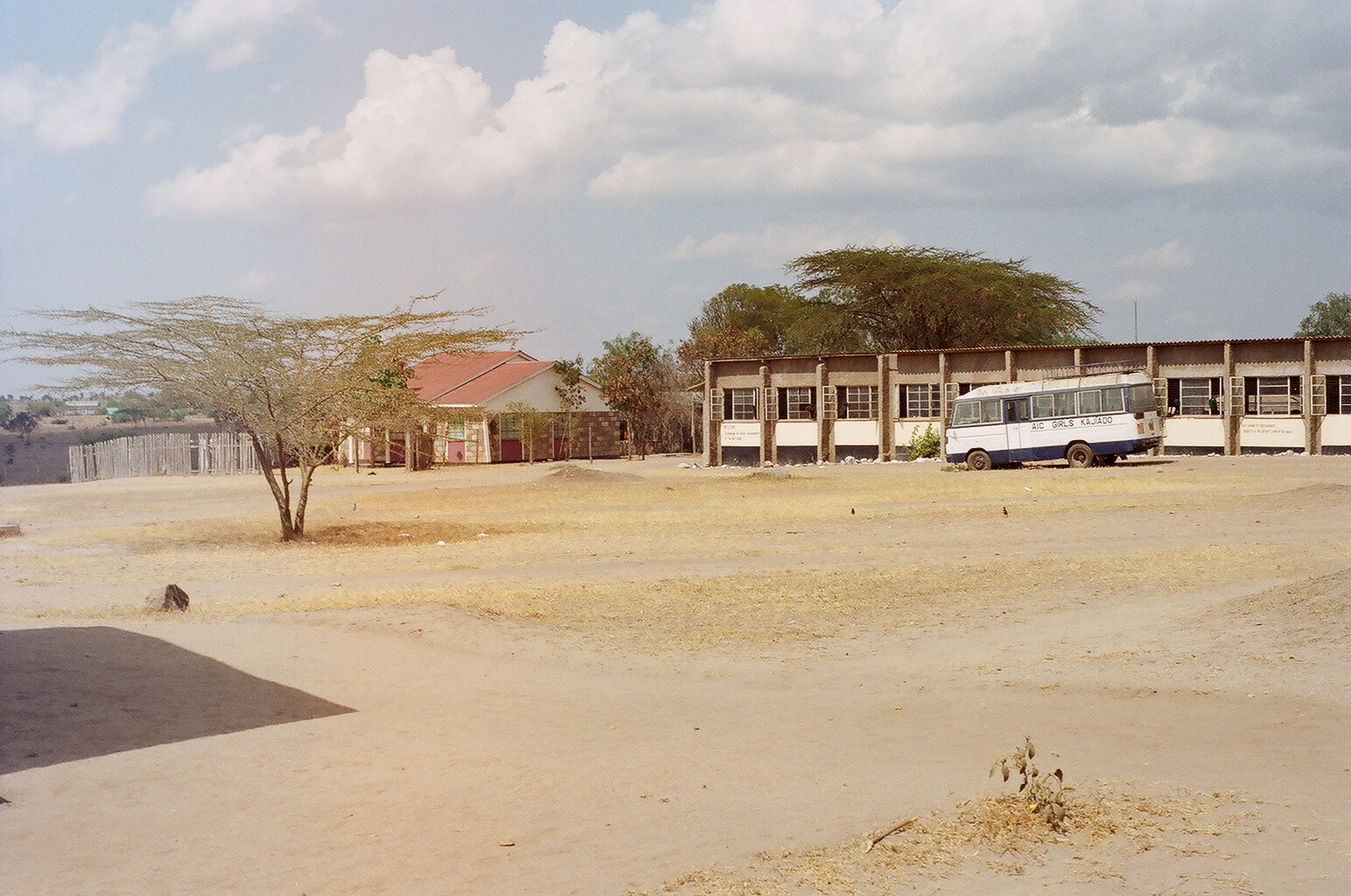
A TYPICAL MAASAI SCHOOL GROUND

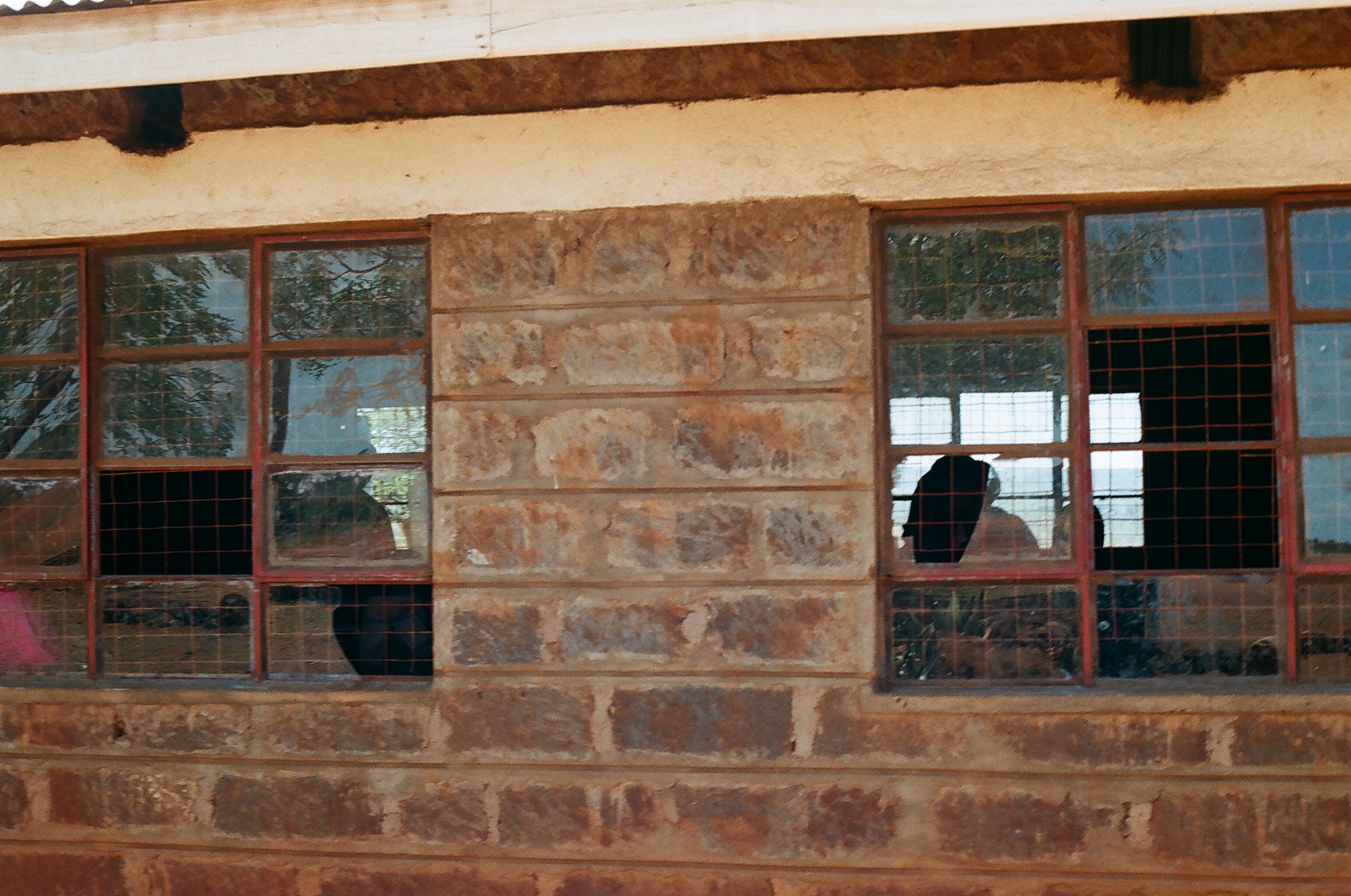
Schools in Maasailand and across Kenya exist in structures of cinder block, corrugated metal roofs, and windows sometimes without glass panes, other times with none. The earthen soil is hardened from constant foot traffic or sometimes there is unevenly poured cement. There are wood desks with benches or not enough of them. This means some students will stand while others sit on the floor, lesson books in their lap, each clutching a pencil.

(Doreen Stratton photo)
DESKS ARE AT A PREMIUM

During our 2015 journey to Maasailand we toured a newly built school for first year students living in an isolated village. The floor consisted of rocks which hopefully later, would be poured over with cement.

(Doreen Stratton photo)
DESKS AND BENCHES ON A ROCK-FILLED EARTHEN FLOOR

In the Central Bucks School District, we are billed annually with a tax which supports public education for our youngest citizens. My children and grandchildren are long gone from the Doylestown schools which they had graduated. How blessed they were to learn in buildings nothing like those I walked through in Kenya.

(Doreen Stratton Photos)

I do not mind paying that school tax. I am helping in the education of America’s future Leaders. We are blessed to enjoy public education in this country.

BUT TROUBLE IS BREWING FOR AMERICA’S PUBLIC EDUCATION SYSTEM

In a February 8, 2025, NPR article by Jonaki Mehta, about the nomination of Linda McMahon to head the US Department of Education. Confirmed in early March, McMahon is best known as head of World Wrestling Entertainment. The February article reported:

 “McMahon has a limited background in education, along with her career as a business executive.”

The lady of wrestling had served on the Connecticut State Board of Education and during #45’s first term, she had led the US Small Business Administration.

True, we are overwhelmed with challenges confronting us here in the Central Bucks School District. I close with this

Buckle up supporters of public education: We are in for a rocky ride.

Covid-19 in Kenya

The Covid-19 pandemic has consumed many of us in our local communities and places across America. With my mixed African-European heritage and having traveled to the Motherland, I’ve been following the pandemic’s rise in Ghana, Egypt and Kenya. It is Kenya I follow the most because of my association with The Maasai Cultural Exchange Project (MCEP).

Since 2005 MCEP brought life-saving changes to the 5,000 people in the Kenyan e of village of Olosho Oibor. Much of our progress has previously been published in my blog,  describing the 15 years of support from hundreds of Bucks County citizens that resulted in 7 water wells and education fees that helped over a hundred students attend either primary or secondary schools and some in college.

In early June we received an email from Francis ole Sakuda, the founder of Simba Maasai Outreach Organization (SIMOO), the NGO and our partner in assisting the village. Their main goal is to improve healthy living standards of the poorest in their community through sponsorship of needy children, provision of clean water for domestic use, women’s issues and environmental conservation.

Francis’ email expressed concern for their survival, even though the virus had not yet reached inside their village. We suggested they begin sewing masks from the colorful wraps worn by the women, wash their hands and utilize the greenhouses for food.

We just received another email from Francis with good news as the village remains virus-free. They have been able to provide some relief food donated by the Congregation Church of New Canaan for vulnerable families in isolated village areas. Over 3000 face masks have been distributed throughout the village and many Maasai have begun to farm their land growing green vegetables, the staple food of their diet.


Francis ole Sakuda, at right with SIMOO distributing food from the Congregation Church of New Canaan, Connecticut (photo from SIMOO)

There is a site on the BBC News web that lists a daily count of the virus in each African country. On June 9 the Coronavirus in Africa tracker listed Kenya with 2,862 confirmed cases, 849 recovered and 85 deaths. On the whole, Kenya has been spared as compared to South Africa with 50,879 confirmed cases and 1,080 deaths.

We ask for your prayers to keep safe this indigenous nation.


Water is life

(Photos by Doreen Stratton)

The recent spate of articles featuring the shortage of fresh water and the proliferation of unpotable water recalled for me my week-long trip to Africa five years ago this February. At that time, I along with Phyllis Eckelmeyer and Alice Sparks had traveled to the Kenyan Maasai village of Olosho oibor.  As the committee for the Maasai Cultural Exchange Project (MCEP) our itinerary included a fact-finding tour of our organization’s programs. The schedule included visits to primary schools, water wells and visits with our Maasai friends. Francis ole Sakuda, a Maasai Tribal Leader and his wife Susan Naserian Nketoria hosted us in their home.

(Sakuda, the first in his village to attend college, holds an Anthropology Degree and a Masters in International Relations and Resolution. In 2018 he was appointed Kajiado County Executive Committee Member for Public Service, Administration and Citizen Participation.)

MCEP’s history with this Maasai tribe reaches back to 2003 after Eckelmeyer’s chance encounter with Sakuda on the Hamilton New Jersey Train platform. A conversation ensued and Eckelmeyer, realizing the struggle for potable water in Sakuda’s community founded MCEP. A partnership was formed with Sakuda’s NGO—Simba Maasai Outreach Organization (SIMOO) and our non-profit organization. After MCEP received a $30,000 donation, in 2005 the first well was drilled. Subsequently six more wells have been drilled across their village of 5,000 people.

Pipes traverse throughout the village carrying water to cisterns installed on individual manyattas, which is the Maasai term for property, usually encompassing a size of one acre. Piping also reaches inside three greenhouses that bring water for drip irrigation of vegetables, the staple diet in Maasai culture. School age girls, previously at home caring for younger siblings, are now attending school. Women, freed from walking miles every morning instead spend those hours perfecting their beadwork which they sell at market.

On the Sakuda manyatta, it is protected by a 20-foot tall wire fence intwined with branches from the prickly acacia tree. A 5,000-gallon polypropylene cistern sustains the family for all their water needs. One gate kept open during daytime hours is always secured at night. Inside the manyatta is a second fenced area called a Boo Oonkishu for livestock. Dogs are common fixtures in manyattas, becoming the alert system at nighttime against prowling wildlife. I remember waking from sleep one night… the dogs were furiously barking at something on the other side of the fence.

Five Nkajijik (Maasai plural for houses) are scattered around the Sakuda manyatta. Except for a Jikoni–a small building with a dirt floor where meals are cooked–all the other Nkajijik have concrete floors. During my 2009 visit I stayed in the Enkaji OOlmaasai the guest house built with cow dung and wood. In 2015 we stayed in the Enkaji oolashumpa, built with tin. The Enkaji where we ate and socialized, had three separate rooms.

The Choo–a word borrowed from the Swahili language–is the bathroom. Constructed of wood and mud it too has a concrete floor. Two drains opened in the concrete are approximately 5 inches in diameter and have been dug to a depth of ten feet. For the convenience of guests who’ve traveled from America the drain for human waste is fitted with a toilet commode cemented to the floor. The other drain takes the water emptied after personal body hygiene.

The Choo

Every morning I carried my soap, towel, wash cloth, a gallon plastic tub of warm water and a water bottle tucked under my arm to the Choo. Dipping the cloth in the warm water cleansing my body the best I could before emptying the rest down the pit drain.
At my two travels to Kenya I had witnessed women carrying the five-gallon metal jugs of water, a canvas strap stretched across their forehead that secured the jug to their back. The jugs are the same size as those plastic blue water bottles found in homes or offices.

Each time I observed women gracefully balancing these jugs I wondered if I can do the same. One afternoon sitting near the cistern while the women scrubbed their canvas shoes I asked if I could try walking with a 5-gallon jug of water strapped to my back. They filled a jug, tied the strap to my forehead and hoisted it on my back.
I could barely stand, let alone walk upright. I almost fell on my butt.

Compared to how people in developing nations around the globe subsist without potable water, my personal hygiene in Maasailand was a luxury. While the average American home uses 100 gallons of water a day, across the globe millions of people subsist on 5 gallons or less of diseased or non-potable water every day.
MCEP often speaks at public schools about the Maasai culture. No matter what the students’ grade level, it’s always a wake-up call for them every time we describe the tribe’s struggle for water.

The April 2010 National Geographic magazine published water facts. Here are some from the list:
• 2% is fresh water locked in snow and ice
• 1% is for consumption
• One out of eight people lacks access to clean water
• 46% of people on earth do not have water piped to their homes
• 3.3 million people die each year from water-related health problems
• 2 billion gallons are used each day for irrigating golf courses
• The largest water tunnel supplying New York city is 85 miles long and leaks 35 million gallons of water per day.

During our 2015 visit our friends described a rail line passenger project under construction by the Chinese government. Beginning in Nairobi, the line which travels south from Nairobi to Mombasa, was completed in June 2017. In a recent email from Francis, he reported that a Chinese project crossing through Maasailand had discovered a huge water aquifer. Francis was able to negotiate the well’s ownership to the Maasai community.

Now there are eight wells on Maasailand. MCEP’s goal has always been ten wells and we’re confident the last two will happen.

An Education Program that MCEP began with one hundred students and supported by donations in America, now remains with the final twenty-two students: ten boys and twelve girls. Twelve students are in high school; ten in elementary. Since 2015 I have been supporting Lisa Sinantei who I wrote about in a July 27, 2017 post, “Lisa’s in school!”. She is in Grade 5.

Two other Maasai young men, also receiving donations have matriculated onto higher education. This past summer a young Maasai woman graduated from university, becoming one more empowered woman prepared to lead her country toward prosperity. Educating young girls has saved them from arranged marriages, sometimes before they reach puberty; and has encouraged this patriarchal culture to follow Kenya’s law of banning FGM (Female Genital Mutilation).

President Trump’s recent edict to rollback regulations of the 1972 Clean Water Act, along with his complaints against water saving devices, brings me to paraphrase that legendary piece of dialogue from “Game of Thrones”:

You know nothing Mr. President.

Although the Maasai in Kenya continue to experience periodic droughts and threats to their pastoral culture, I witnessed why Water is Life; why Knowledge is Power; and 5,000 Maasai know many things.

Lisa’s in school!

Lisa — Eager and Ready to Learn.

It was February 2015, on my second sojourn to Maasailand in Kenya when I decided to sponsor annual school fees for a girl student. Along with the two other committee members of the Maasai Cultural Exchange Project (MCEP) our ten day itinerary also included an evening meal at the family home of John Sakuda. John had been a valued facilitator at our scheduled MCEP visits in the years 2011, 2012 and 2013 while he lived in America. He returned to Kenya shortly thereafter.

When we arranged our 2015 fact finding trip we were looking forward to seeing him again. As it happened, we were thrilled to discover that John would be our guide during our sojourn to the village. The day before flying back to America, we drove to John’s home  where I met Lisa–one of his daughters–and decided to sponsor her education. Lisa is now in “Grade Two” and like other Maasai children, thrives on attending school. Each December I donate the required $150.00 annual tuition that also pays for her mandatory school uniform.

Recently I emailed John asking for a picture of Lisa and how she was progressing at school.

John writes that she is almost 3 feet tall and 45 pounds. He adds, “… Lisa’s favorite toy is her cat, a real cat … she loves this cat the most. Whenever she comes from school she has to feed it. Sometimes the cat goes in the neighborhood but Lisa makes sure she brings him back to her home. Lisa is afraid of cows. She says they are wild animals and they have horns that can harm people. Yet Lisa has no fear of goats.”

John continues, “I used to have goats at home. Lisa liked them and she could milk them and give her Mum Susan the milk for the family’s chai (black tea with sugar and milk).” The Maasai diet of chapatti (similar to a flour tortilla), meat, Sukuma (chopped kale or collards in oil)  or variations of Sukuma are favorites in Lisa’s diet. “She helps at home, sweeping the house…washing dishes and taking responsibility for washing her socks and school uniform.” John writes that Lisa never fails to tell him how much “… she loves me…”. And finally he writes …”always Lisa asks me to remind her … to do her homework.” 

Lisa is one child in John’s large family that includes a son in university and two other sons in high school, all benefiting from some amount of MCEP donations. Another daughter is under the sponsorship of a church.

There are children–mostly girl children–in developing countries across the planet where some cultures do not allow girls to attend school. Fortunately, the NGO that  MCEP partners with encourages girls to get an education.

The other morning while listening to BBC/NPR–they reported on Malala Yousafzai, the young Pakistani girl  who in 2012 at age 15, nearly died after an assassination attempt on her life because of her public advocacy for girls’ education. Now graduated and 20 years old Malala visits and interacts with girls in developing countries who are  denied an education. MCEP is familiar with Malala because one of our Maasai woman was featured in my April 19, 2015 post (Leah Loto: Also known as Mama Leah). For a brief time Leah was employed by ‘Free The Children’ the Canadian organization that Malala is affiliated with.

In 1999 during my first sojourn to the African country of Ghana, a young girl walked up to me and asked for my address. Annabelle Elliamo was in her mid-teens and living with her widowed father. A few weeks into our correspondence she asked me to help her with tuition fees so she could finish her education. Annabelle is now a teacher in her Ghanaian village.

Typical school grounds and building for Maasai students

It’s Lisa’s journey to learn now and I’ve no doubt she will follow in the path of the other Maasai  students who’ve been sponsored by MCEP I’ve no doubt that she too will become a major contributor to her community.

A Maasai school classroom


“Luck”

(Photos by Doreen Stratton)

Five Maasai men walked on to the platform at the Hamilton, New Jersey Train Station. Instinctively, Phyllis Eckelmeyer walked over to them, because her daughter was leaving the next week to spend a year teaching in Kenya. She reached out her hand and said,  “Hello, do you speak English?” The Maasai were traveling to New York City to participate in the 2004 United Nations Permanent Forum on Indigenous Issues. They were an indigenous tribe of hundreds from across the globe traveling to the UN for this Forum.

The Forum as described in the UN’s 2005 archives’ focus was to “… deal with indigenous issues related to economic and social development, culture, the environment, education, health and human rights.”

Sharing the train to New York with the Maasai, Eckelmeyer heard how their lives were negatively impacted due to diseased-laden water. They said their two-minute speech before the UN would speak to the need for potable disease-free  water. After her return to Bucks County Eckelmeyer vowed– “I want to raise $30,000 to drill a well that’ll bring water to this Maasai village.”

She formed a non-profit: Maasai Cultural Exchange Project (MCEP). MCEP then came under the umbrella of Frog Pond Productions, an educational (501)(c)(3) organization in Point Pleasant Bucks County. A partnership was formed with an NGO in Kenya–Simba Maasai Outreach Organization (SIMOO), so that American donations could enhance SIMOO’s programs. Shortly thereafter, local media coverage brought a $30,000 anonymous donation to MCEP’s mailbox.

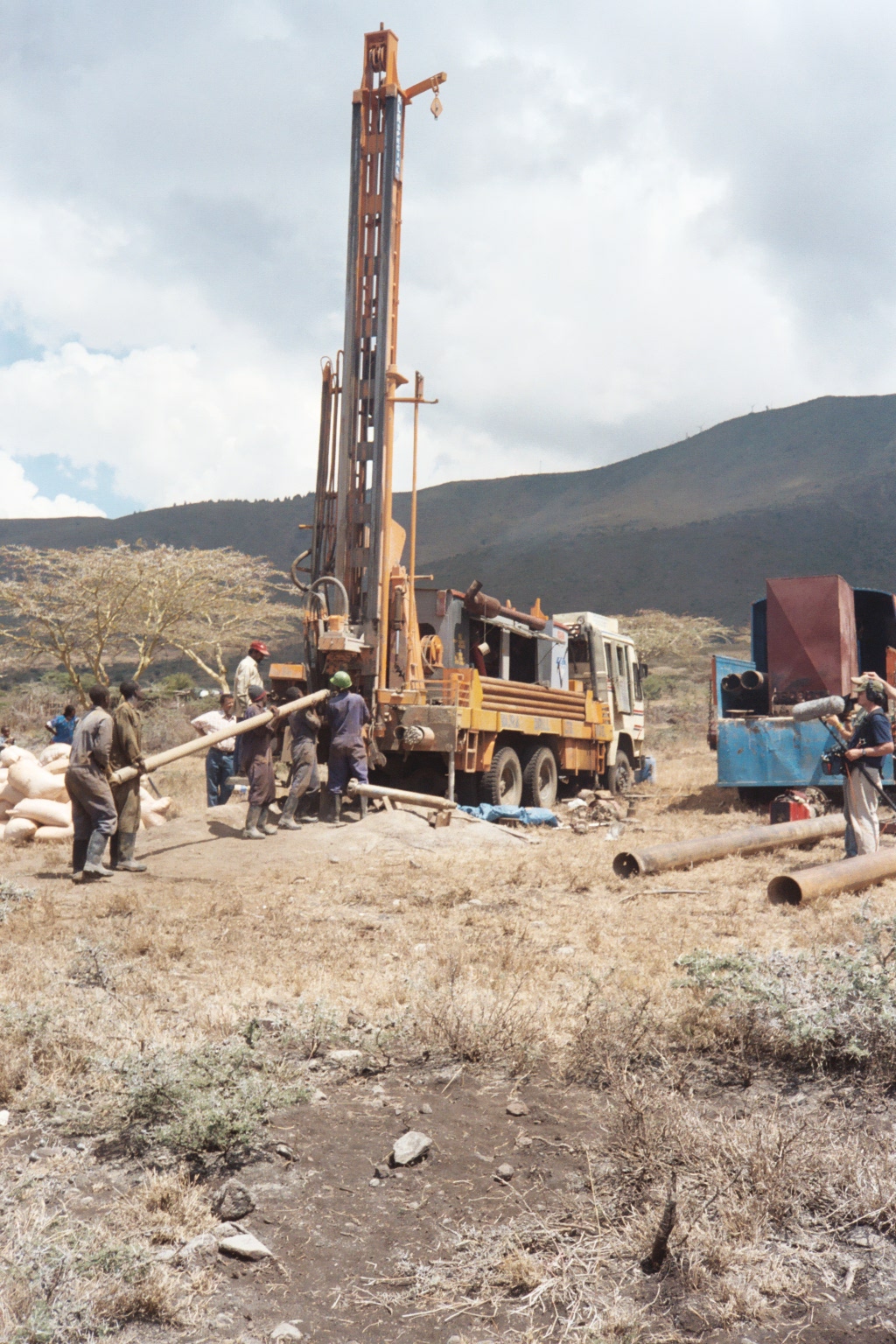
(MCEP Archive photo:  The drilling of “Christy’s Well”)

To document the drilling of this first well, in December 2005 Frog Pond and MCEP traveled to Kenya with a film crew. The well was named “Christy’s Well” after the anonymous donor. A Philadelphia film company–Shooters Post and Transfer–volunteered the crew and editing talents that ultimately produced a half-hour documentary titled QUENCH. The initial screening of QUENCH would take place in October 2014 at Delaware Valley University in Doylestown, Pennsylvania.

Since 2005 and every year afterwards, at least two Maasai have traveled to Bucks County. They spoke in thousands of schools, houses of worship and professional organizations about their culture and heritage. Their message resulted in annual sponsorships to over 100 Maasai children in primary or secondary schools and colleges. More  importantly  donations came in for water projects. There are now seven wells sited across this village that encompasses an area the size of Bucks County.

“… three more wells.”

Maasai herders and women pay a small fee of a few shillings for the water they draw from the wells. Designated Maasai men are responsible for maintaining the wells, collecting fees, and ensuring that diesel fuel is available to keep the pumps operational. Pipelines snake away from the wells to strategically placed cisterns so that women walk less than two miles to fetch potable disease-free water. MCEP’s primary goal is for ten wells to be sited across their village. We are determined to secure funding for the final three wells.

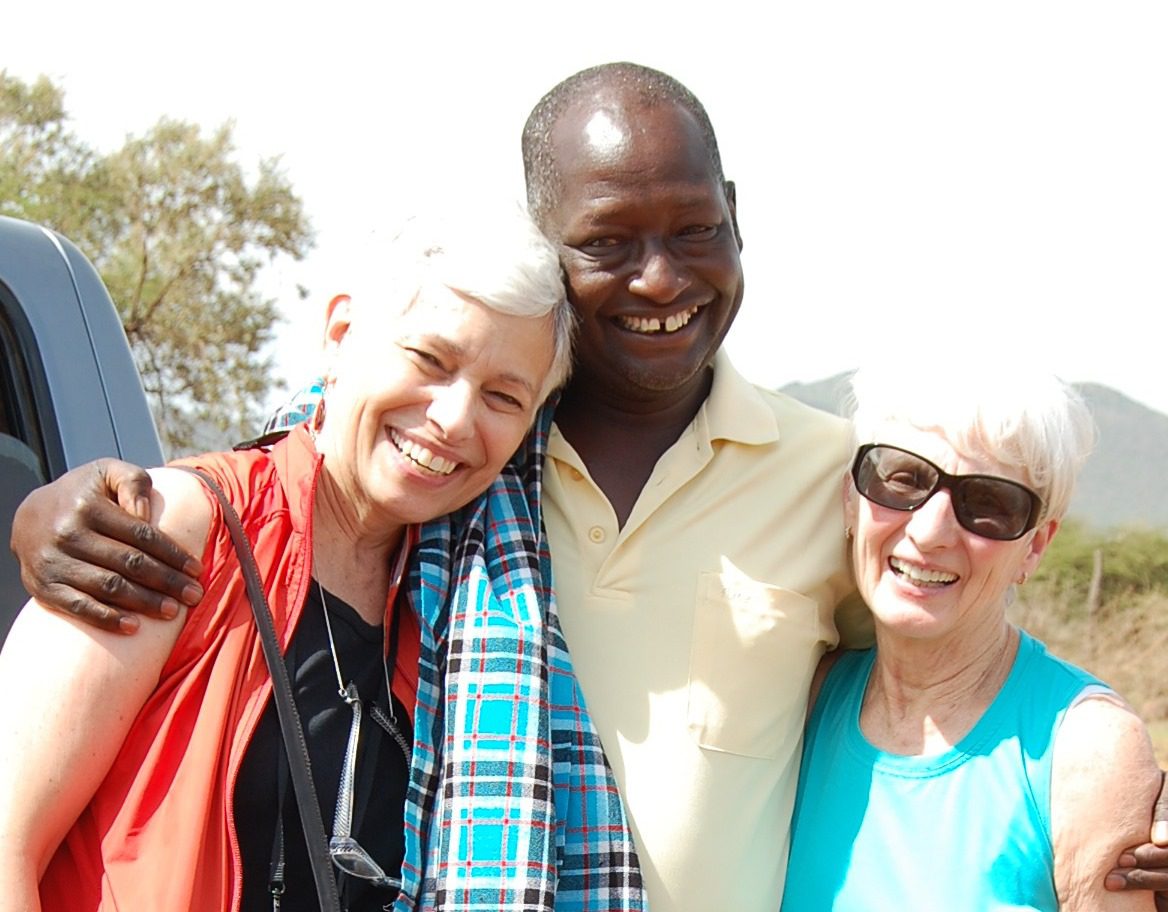
Since 2005 women have also come into their own. Last March and April 2015, I posted  six blogs about Maasai women and their journey toward lives as independent business owners. Two are pictured below with Phyllis, taken when in 2015 I traveled to Kenya with Phyllis and Education Coordinator Alice Sparks. We toured well sites, schools and spent enjoyable hours with our Maasai friends, delighting over the positive changes since our visits a few years ago.

Sarah Senewa and Grace Suyianta Salau with Phyllis Eckelmeyer

These changes are also bringing progress (some good, some not so good) to the Maasai village. A safe house is sheltering and educating over 100 young girls who had fled from early arranged marriages or female genital mutilation (FGM is banned in Kenya). The Kenyan government is constructing a vocational school where village boys and girls can enroll to gain income earning skills. Giant transmission towers are planted across Maasailand as they march from Nairobi toward Mombasa on the shores of the Indian Ocean. Oil has been discovered offshore from Mombasa and this infrastructure will bring a cultural crises to the Maasai community.

Water is Important.

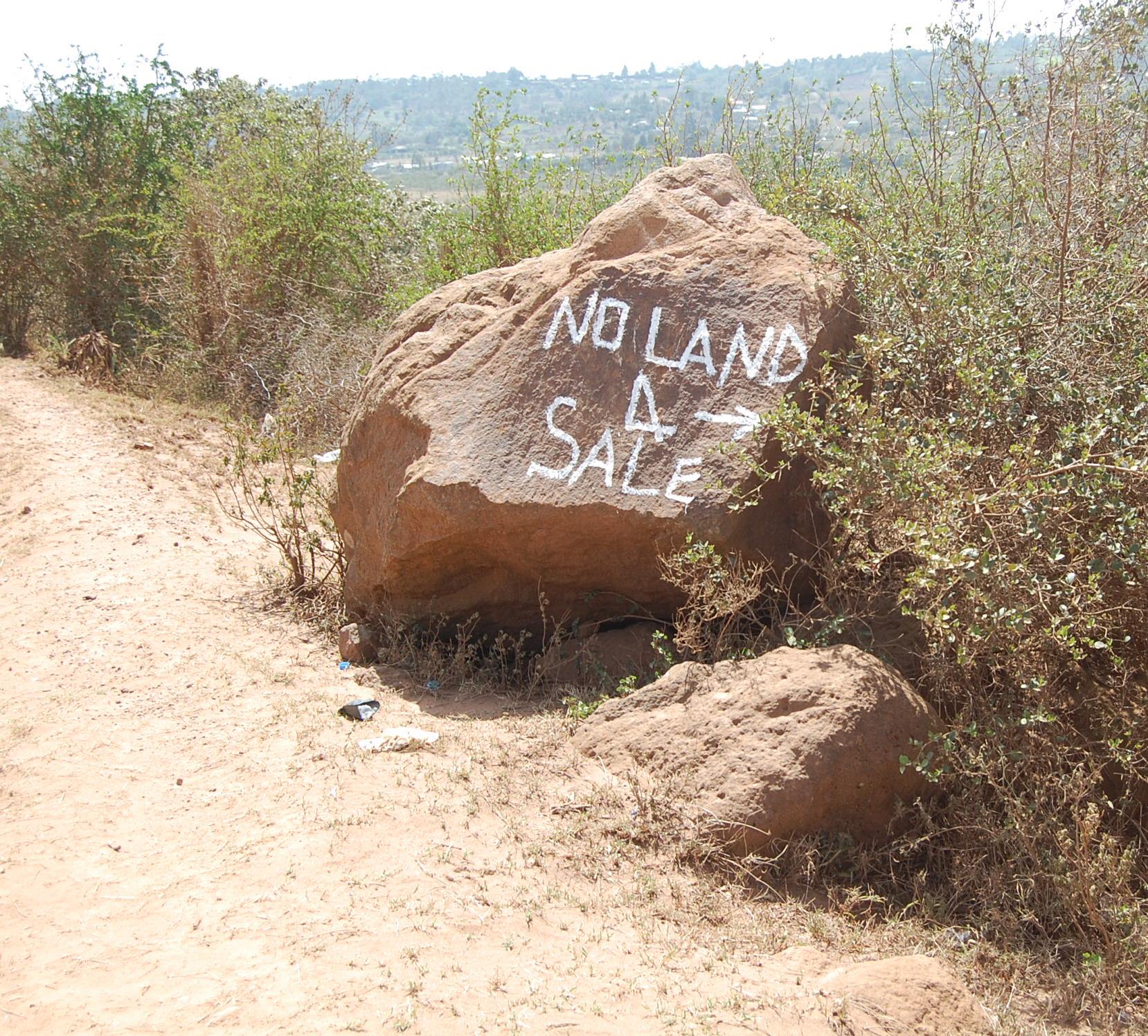
The wells have brought land speculators to Olosho oibor who wave small amounts of cash in front of landowners in attempts to persuade them to sell their land. SIMOO is pushing back against the speculators by cautioning their tribal members the consequences of selling their land: How it would lead to the extinction of their ancient culture and heritage. Although we noticed  contemporary homes under construction we also spotted hand-painted signs declaring properties Not For Sale.

Land speculators invading Maasailand. One of several  “no sale” signs we saw during our tour.

“A drought is decimating the Maasai community … “

Climate change has created a drought that is decimating the Maasai community as well as many other parts of Africa. I wrote about it’s effect on the Maasai in my February 17, 2017 post, “Climate Change is real”. Shortages of food are so prevalent that the Massai have forsaken their valued herds in favor to feed their most vulnerable: the elderly and the young. MCEP recently wired funds so SIMOO could set up a food security program.

The Maasai word for “Luck” is Namunyak (Na-men-YAK). “Luck” can sometimes move beyond one positive gesture. The Maasai decreed that Eckelmeyer be given the name “Namunyak” to honor how a handshake between strangers transformed their village. I get goosebumps looking back at the many gifts that have come to the Maasai since her 2004 greeting on that Hamilton New Jersey train platform. The gift I cherish the most is the empathy and curious energy always expressed by youngsters in classrooms and assemblies after listening to our Maasai friends.

On Friday April 7, Phyllis Eckelmeyer will receive the Central Bucks Chamber of Commerce Lifetime Achievement Award for her Humanitarian efforts.

Congratulations Namunyak!

Phyllis, John Sakuda and Alice Sparks taken at our 2015 Fact Finding Tour. John was our rock star on visits to schools in 2011 and 2012 while living in America. He is now back in Kenya caring for his family and cattle.


Cecil: “Simba”

“Did you ever kill a lion?”

That question was always asked by children wherever and whenever our Kenyan Maasai friends spoke at presentations on behalf of the Maasai Cultural Exchange Project’s visits inside numerous Bucks and Montgomery  County schools. I was reminded of their curiosity when the outrage blew up after the killing of Cecil the lion by that big game hunter.

Those children’s innocent pursuit for knowledge led me to contrast the tortuous slaughter of Cecil the Lion  with the Maasai’s decision to disband their ancient tribal custom of killing lions. Years and even generations before big game hunting in Kenya was banned in 1977, this indigenous tribe killed lions to establish their bravery as Warriors. However, after diseases such as rabies or canine distemper and the rise of unlawful poaching, the Maasai began the practice of olamayio, the Maa word that means ‘Group Hunting’. Now the Maasai hunt to kill lions only when the animal suffers from those diseases which could threaten their cattle, goats or sheep.

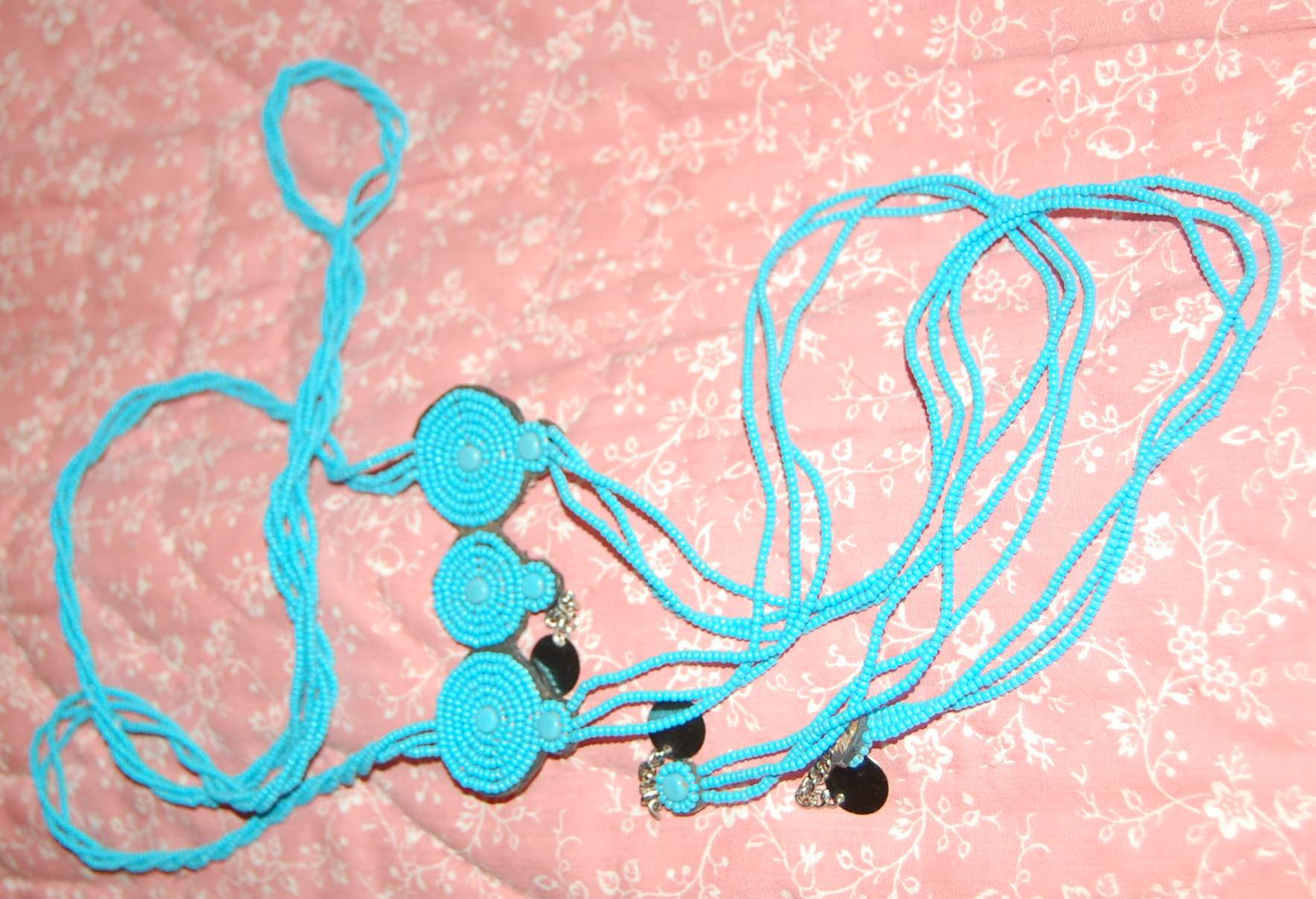
This piece of Maasai jewelry is called 'issurri'. It is a special ornament worn only by mothers whose sons are going through the Rite of Passage, also known as Warrior-hood (moranship)

This piece of Maasai jewelry is called ‘issurri’. It is a special ornament worn only by mothers whose sons are going through the Rite of Passage, also known as Warrior-hood (moranship)

Olamayio, is also practiced in the Maasai ‘Rite of Paasage’, the cultural ceremony where young males become adults through their transition to Warriors. The ritual no longer ends with the killing of a lion. Instead whichever boy in the group runs the fastest to reach out and grab the lion’s tail receives the honor of Warrior, thereby representing all the other boys in the olamayio who  complete their ‘Rite of Passage’ with him. More importantly the Maasai don’t eat the meat of lions or any wildlife, limiting that aspect of their diet to goat and beef.

The NGO we partner with–Simba Maasai Outreach Organization–is committed to preserve wildlife in the land surrounding their Olosho oibor village. The Lioness–the identifying name for females–is never hunted because her role is to ensure the continuation of the species. The Maasai’s reverence for the lioness is reflected in a true story that occurred several years ago in Olosho oibor: A lioness protected a lost child until found by the villagers. In time I believe this incident that is already a legend throughout Olosho oibor will become a Maasai folktale the elder women will tell over and again to their grandchildren.

The outrage since Cecil’s death remains loud and worldwide.  Researchers at Oxford University in Great Britain had for over ten years observed Cecil through a tracking device on his neck as he roamed the terrain in Zimbabwe’s National Park. Now that’s lost. Positive reactions include more awareness about the threatened loss of wildlife in Africa and around the globe. Some airlines will no longer transport carcasses of killed wildlife in the belly of their planes. Zimbabwe is attempting to extradite dentist Walter Palmer to their country to face charges for his “illegal” kill. The dentist remains in hiding since his hunt/kill of Cecil.

Return to the Motherland

?????????????????Today, February 19 I travel to Kenya, East Africa—the Cradle of Civilization. This is my fourth Sojourn to the Motherland and my second to Kenya. In my other two Sojourns, 1999 carried my soul to Ghana where I walked inside the dungeons that imprisoned my African ancestors. In 2000 I rubbed  my hands across finely carved blocks of stone that created the Egyptian Pyramids.

I will travel with Phyllis Eckelmeyer and Alice Sparks. We form the volunteer triage for the Maasai Cultural Exchange Project (MCEP). For eight days we will live in the Maasai village of Olosho oibor–a village that is thriving because of the generous financial support from thousands of adults and school children in Bucks County and beyond.

When MCEP was founded in 2005 the goal was to raise funds for the drilling of a well that would bring potable water to the Maasai. Seen below at left is the first well–Christy’s Well— named so for its generous benefactor. This well was drilled in December 2005. It continues to bring potable water to the 5,000 Maasai living in Olosho oibor. A film crew accompanied MCEP Co-founders Phyllis Eckelmeyer and Jennifer Ellsworth to this drilling. A half hour documentary, QUENCH is completed and will be distributed to schools and other supporters of MCEP.

Ten years on–

7-2005 *There are now seven wells sited across Maasailand.

*One hundred Maasai children are benefitting from education sponsorships.

*The Maasai have installed pipelines and cisterns that carry water from the wells to schools, greenhouses and infirmaries.

*Maasai women have established a beading co-op that brings additional income into their households.

I’ll journal while in Kenya as blogging might be impossible with our busy itinerary. We’ll tour the wells, the schools, the greenhouses and meet with Maasai who have been instrumental in many of these improvements. We are also excited about the prospect of filming elder Maasai women while they retell ancient and indigenous folktales that have been carried down from previous generations. The Maasai language is not written down; and from these oral stories we will print children’s coloring books, similar to one we printed in 2011 titled The Lion, the Ostrich and the Squirrel.

What’s on My Bucket List for Kenya? 1) Inhale the scent of Africa as soon as I walk outside of the Nairobi Air Terminal; 2) Rise early one morning to milk a cow; 3) Feel the burden of carrying a jerry can on my back filled with water; 4) Visit the Market in Ngong Hills; 5) Walk the earth in the Rift Valley; 6) Attend the Maasai Sunday church service; 7) And everything else to absorb this last half of Black History Month 2015 while I Sojourn in Kenya, East Africa.