It’s gonna be a bumpy ride

Traveling to Kenya in 2013 with the Maasai Cultural Exchange Project, Inc (MCEP), we visited a few elementary schools. It was culture shock. In Kenya, paying the price of education comes IF parents have $100 to $150 each year for a child to attend school.

(Doreen Stratton photo)
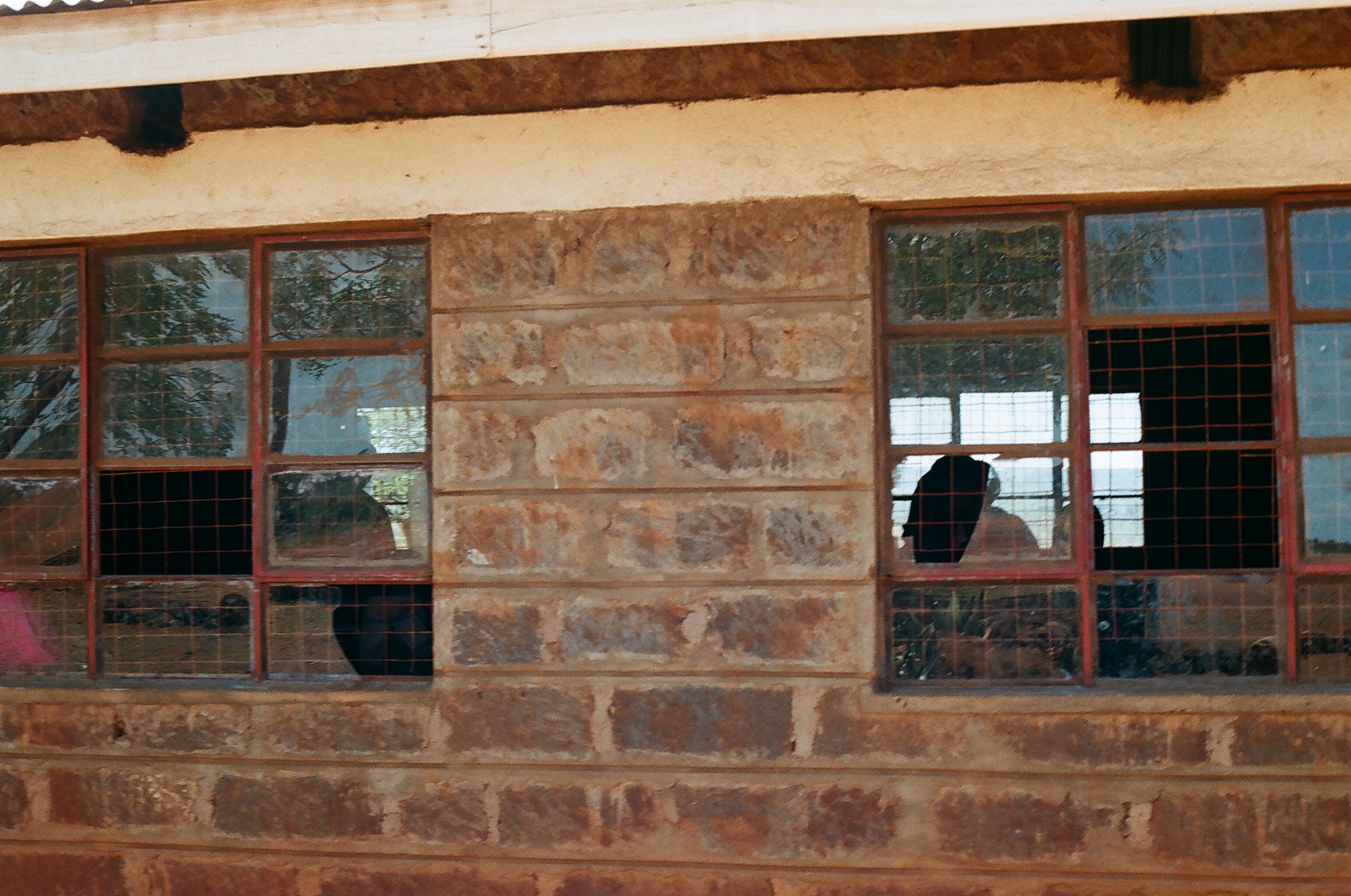
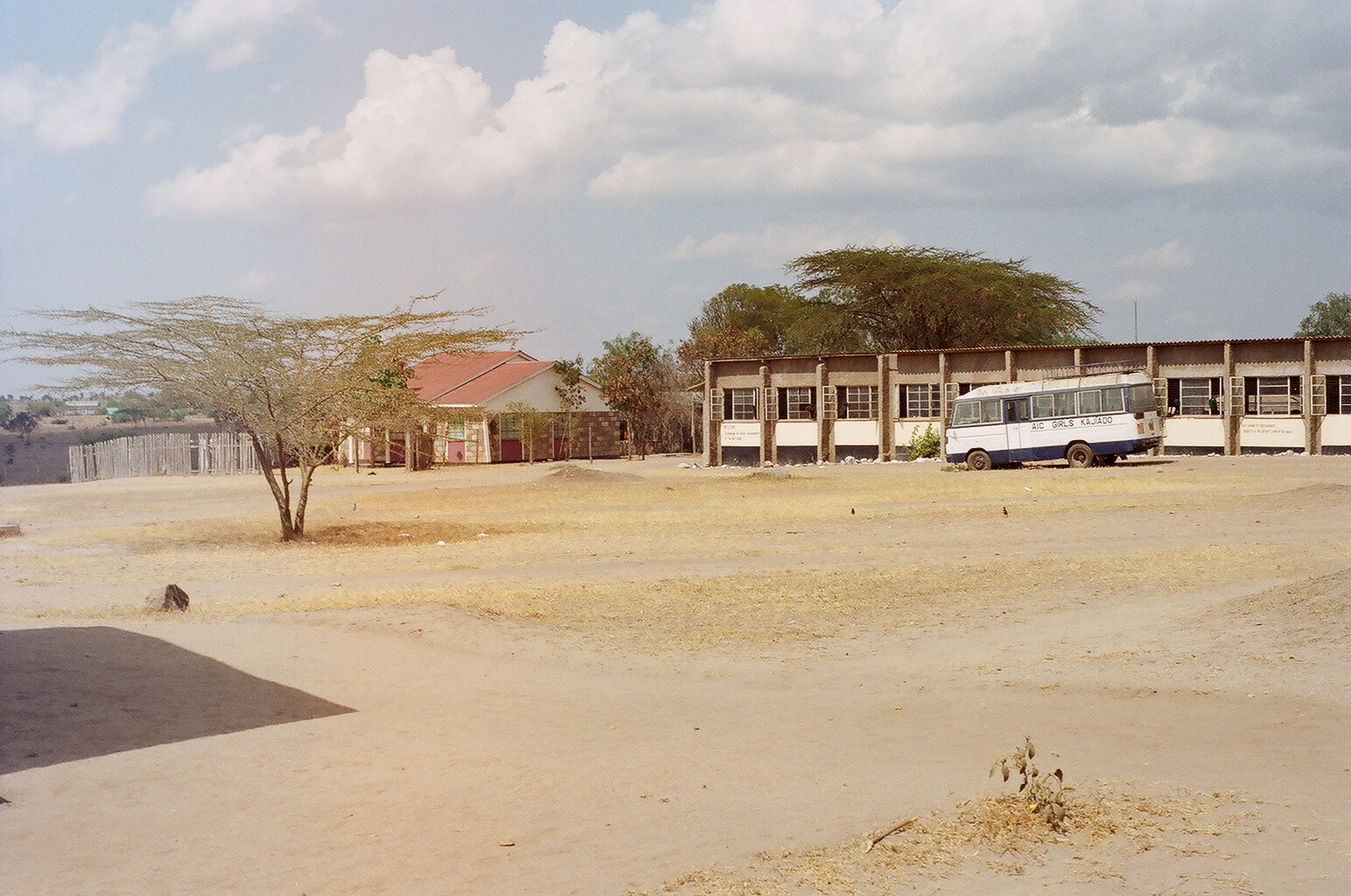
A TYPICAL MAASAI SCHOOL GROUND

Schools in Maasailand and across Kenya exist in structures of cinder block, corrugated metal roofs, and windows sometimes without glass panes, other times with none. The earthen soil is hardened from constant foot traffic or sometimes there is unevenly poured cement. There are wood desks with benches or not enough of them. This means some students will stand while others sit on the floor, lesson books in their lap, each clutching a pencil.

(Doreen Stratton photo)
DESKS ARE AT A PREMIUM

During our 2015 journey to Maasailand we toured a newly built school for first year students living in an isolated village. The floor consisted of rocks which hopefully later, would be poured over with cement.

(Doreen Stratton photo)
DESKS AND BENCHES ON A ROCK-FILLED EARTHEN FLOOR

In the Central Bucks School District, we are billed annually with a tax which supports public education for our youngest citizens. My children and grandchildren are long gone from the Doylestown schools which they had graduated. How blessed they were to learn in buildings nothing like those I walked through in Kenya.

(Doreen Stratton Photos)

I do not mind paying that school tax. I am helping in the education of America’s future Leaders. We are blessed to enjoy public education in this country.

BUT TROUBLE IS BREWING FOR AMERICA’S PUBLIC EDUCATION SYSTEM

In a February 8, 2025, NPR article by Jonaki Mehta, about the nomination of Linda McMahon to head the US Department of Education. Confirmed in early March, McMahon is best known as head of World Wrestling Entertainment. The February article reported:

 “McMahon has a limited background in education, along with her career as a business executive.”

The lady of wrestling had served on the Connecticut State Board of Education and during #45’s first term, she had led the US Small Business Administration.

True, we are overwhelmed with challenges confronting us here in the Central Bucks School District. I close with this

Buckle up supporters of public education: We are in for a rocky ride.

Don’t Mess with Black History at My School

“ . . . but at last all the other nations of the earth seemed to conspire against the negro race, . . . Thus this race of human beings has been singled out, owing to the accident of color, or to their peculiar fitness for certain kinds of labor, for infamy and misfortune; . . .  a slavery confined entirely to negroes.”

(An excerpt from — The History of Slavery and The Slave Trade, Ancient and Modern

Compiled from authentic materials by W.G. Blake, Columbus, Ohio:

Published and sold exclusively by H. Miller 1860)

******

During my education at Central Bucks High School, the only thing I learned about Black History was: There was a Civil War and President Abraham Lincoln freed the slaves.

Before European explorers stepped on the soil of Africa and discovered those swarthy people with tangled hair and inexplicable dialects, slavery had persisted throughout the ages of civilization. Along with gold and timber, Africans were considered Cargo with an identity less than human, a distinction which still remains four hundred years later.

Unlike immigrants or refugees, or settlers, or asylum seekers who had departed their homelands either through choice or terror, those expatriates often arrived with snippets of their heritage, be it a suitcase stuffed with precious memories, a photograph or a book or a sprout from a mature fruit tree, sometimes with nothing but the clothes on their backs, they arrived in America with Hope.

Africans arrived in America without their culture, their identity, their Freedom nor their Hope.

Growing up in Doylestown prior to the Civil Rights Movement of the 1960s, I failed to comprehend how my skin tone reached back to Africa. “Black” or “African American” or “Bi-Racial” were ethnic identities which never gained preference until after the Civil Rights Movement. Tagging along with my parents on election days, I also never comprehended how my parents’ Right to Vote in Bucks County was not available to “Negroes” in communities across the South. The racial injustice, lynching and riots across the South were also foreign to me, a twelve-year old “colored” girl living in Doylestown, Pennsylvania.

I’m certain I wasn’t alone in my ignorance about my African origin. It was absent in my consciousness until my 1999 visit to Ghana. My Motherland. Since then many other Black Americans have journeyed to the continent in search of their lineage. Just as white Americans travel to their ancestral lands across Europe, Black Americans journeyed to the Motherland and retrieved the  spiritual and cultural inheritance discarded on the beaches of West Africa when our ancestors were shoved in the belly of a slave ship. We returned to America from our Sojourn buoyed with the hunger to search for our African beginnings and fill in the empty spaces of our ancestral lineage.

dsc_7403-1

(Doreen Stratton Photo)

This past July 29, forty relatives spanning five generations of Stratton’s gathered for our third family reunion and to celebrate the unveiling of a Doylestown Historical plaque which was placed on the wall next to our front door.

It was 1887 when my Grandparents—Joseph B. and Lillie A. Stratton—settled and raised their eight children in Doylestown on Ashland Street. My Grandfather “JB” was a veteran of the Civil War, having served in the Union Navy on the USS Calypso; Grandmother Lillie, before she met and married my Grandfather, was a teacher. https://thebucksundergroundrailroad.com/2016/05/21/letter-from-the-civil-war/

My father Sid was the last of the eight children, born in 1900, just four months before Grandfather “JB” died. As the last of the eight he remained at our home where he brought his bride—my mother Dot—and eventually raised me and my five siblings. Today, it is the same home where I and my sister Judith live.

Fragments of my family’s Black History

My father saved pieces of paper that were road maps about our family’s legacy. The family archives consist of prints, maps, letters, receipts and photographs. Some of these items from the collection eventually found their way into a spindle bound, 124-page book compiled by J. Kurt Spence, Researcher at the Doylestown Historical Society. A copy is retained in the museum’s research library.

The walls and rooms of our home seep with memories of joy, tragedy, births and deaths. Whenever I shuffled through old photographs from the early 1920s, my Grandmother smiles, surrounded by friends and relatives she had welcomed in the home. Our only photo of “JB” features an imposing portrait of a proud face enhanced with a mustache and mutton chops. As the years passed, color photographs depict my parents—stewards of the next generation—embracing family and friends at barbeques on the patio, relaxing on the lawns or while gathering around the dining room table, celebrating Birthdays, Thanksgivings and Christmas.

Lillie A. Stratton (Stratton Family Archives)

Driving to the next Central Bucks School Board meeting, Lillie crowded my thoughts; as if whispering in my ear, reminding me the value of Teachers. I am in awe of Lillie, a widow who nurtured eight children into self-assured adults. Interestingly, our family includes Teachers among my father’s siblings; and that calling To Teach continues into the 4th generation.

In the early 1900s only a few one-room school houses were scattered in communities surrounding the Doylestown Borough School, the school where my uncles and aunts, who after graduation excelled beyond “ . . . peculiar fitness . . . “. It was the school which graduated a Doctor, a Dentist, a Cleric, a Teacher and a Musician, Blacks whose History would be Erased if the Central Bucks School Board follows the oppressive epidemic sweeping across America.

The Central Bucks School Board is dominated by 6 members whose recent policies have restricted preventative health, denied gender rights, banned books and suppressed freedom of speech. I fear their next agenda is to remove Black History from our District’s curriculum.

My Black History as well as the histories of every Black resident in the Central Bucks School District matters. It is not a curriculum for removal from My Central Bucks High School.
Reading out of context

Across America School Board meetings have become contentious environments, where extremist groups express their bigotry against marginalized people, be it their race, ethnicity, gender identity or religion. One active and well entrenched group in Bucks County is—

Woke Pennsylvania:

“a grass roots organization working to reclaim our schools”.

This group planned to read sexually explicit passages at the March 8 Central Bucks School Board Meeting. The passages, lifted from LGBTQ published books—can be found on the woke website. Public comments limited to 3 minutes, are scheduled at the top of the meeting’s agenda.

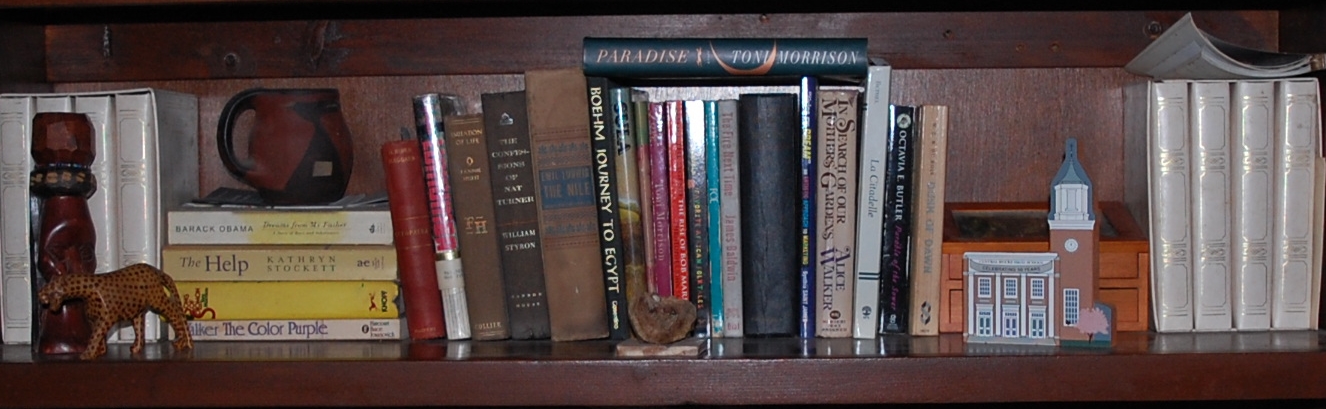
“The Bluest Eye” by Toni Morrison, Nobel Laurate and recipient of numerous literary honors, is one of the books on the Woke website. I decided to attend and read a selection from this her first novel, published in 1970. Three of her novels and one of her nonfiction books snuggle on my bookshelf. “The Bluest Eye” isn’t among my four; however, a dear friend lent me her copy.

Morrison’s words sing across the page. When reading the sentences, I’m in awe of the story she weaves. I settled on a passage from the first few pages where words always entice a reader to turn the pages until reaching The End.

Thirty-eight people registered to speak. The room was full. I recognized the usual suspects—attendees from the previous four meetings. As each strode to the dais, they announced the title then filled with indignation, read the excerpt. Then they demanded the book “… be removed from the school library”.

While waiting my turn, I scanned the room, wondering how many of this vociferous crowd had ever voted prior to the 2021 school board elections. The crowd is also displeased with some of the sitting board members, calling out their names demanding they resign.  A speaker from an extremist political action committee—Back to School PA—furiously waved a glossy 4-page document, exclaiming that ‘dark money!’ helped elect 3 Democrats to the board.

(If you visit the Central Bucks School District website, there is a link to a recording of the February 8 meeting. The public comments begin at 30.00 minutes.)

There were speakers advocating for the Library Bill of Rights—American Library Association policies for school libraries as well as several others who opposed removing books from school libraries. A retired teacher—Speaker #16 and recorded at 1.17.15–spoke eloquently how books help some children “… make sense of their lives”.

I remember when a handful of people would attend these meetings. The Covid virus along with decisions to open or close schools and policies regarding masked or no masked students, pushed any concerns about education to the back of the room. Now, the book banners are in Bucks County and stealing all the oxygen out of the air.

The next Central Bucks School Board at 70 Weldon Drive, Doylestown, is scheduled Tuesday, April 12, at 7 pm.

Climate Change is real

31570002

Since 2005 I’ve been a committee volunteer with the Maasai Cultural Exchange Project (MCEP), a non-profit group under the umbrella of Frog Pond Productions, a  501(c)(3) educational organization in Point Pleasant, Bucks County. We advocate for a Maasai tribe located in Kenya, East Africa. They receive support from Americans in Bucks County and surrounding areas who sponsor children’s education and donate funds for water well projects. This success is due to MCEP’s partnership with an NGO in Kenya: The Simba Maasai Outreach Organization (SIMOO).

In February 2015 I traveled to Kenya with two other volunteers for a fact-finding tour. One of the sites on our itinerary was a trip to the Oloshobor Dam, shown above. Every day herders brought their livestock to drink the water. On this particular day we sat along the bank above the dam. With the sound of livestock splashing in the water, we cherished this time watching herders as they took turns leading their goats and cows to quench their thirst.

The Maasai is an indigenous tribe that from one generation to the next passes down  awareness of their environment. They live with a “Dry season” and a “Rainy season”. In conversations with them they are most concerned about the fluctuations that have occurred to these two seasons. The “Dry” season is extending by months; the “Rainy” season has almost ceased to happen.

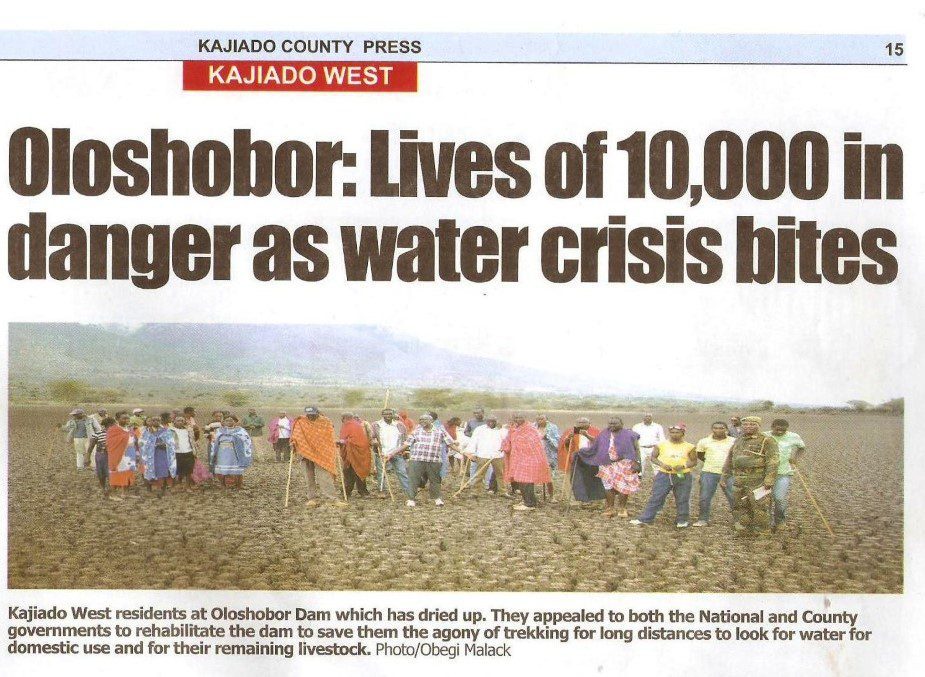
Two weeks ago we received an email describing the dire situations brought about from this extended drought. In this newspaper article from February 2017 this parched land on which they are gathered is a similar dam to the one I photographed in 2015. Both of these dams are now dry.maasai-on-dry-dam-soilFortunately MCEP’s seven wells sited across their village, have quenched the thirst of 5,000 people and their livestock. Funds from donors also helped to install pipelines at the wells that snake across the terrain to cisterns located throughout the village. As the land dries from the drought, these seven wells with potable, disease-free are saving lives.

The Maasai attribute these extended droughts to climate change. Water has become so precious that an emergency decision was put in place. Water for the most vulnerable is the priority. As important as livestock is to the Maasai, they’ve made the decision that the elderly and the youngest will have priority for water.

Many areas of the African continent have already morphed into desert-like landscapes because  weather patterns are no longer “normal” to what many of these countries experienced in the past.  Populations in other parts of Africa are dying because there is a lack of potable water. In Kenya’s Rift Valley the people are eating poisonous plants and their livestock are dying.

This severe change in Africa’s weather cycle is happening around the globe, even here in America. As I write this the United States Senate is debating whether or not to place Scott Pruitt as Secretary of the Environmental Protection Agency. Pruitt does not believe in climate change.

Earlier this week Doylestown citizens packed the regular meeting of the Central Bucks School Board after learning the board was considering adjustments to text books regarding “climate change”. I am a product of the Central Bucks school system from Grade One through Twelve. I thrived in an atmosphere that encouraged the pursuit of knowledge. I’m disappointed that the  Central Bucks School Board may have members elected to that body who dismiss science and/or climate change from the curriculum.

The tinkering of  climate change is not exclusive to the Central Bucks district. Across America elected school board members approve text books with suppressed or altered facts related to science, culture, history, geography and others. School boards have the power to shape our children’s minds. Yet when election cycles for school board candidates are scheduled, the voter is MIA at the polls. Who is running for school board in your community?

Climate Change is real.