“ . . . but at last all the other nations of the earth seemed to conspire against the negro race, . . . Thus this race of human beings has been singled out, owing to the accident of color, or to their peculiar fitness for certain kinds of labor, for infamy and misfortune; . . . a slavery confined entirely to negroes.”
(An excerpt from — The History of Slavery and The Slave Trade, Ancient and Modern
Compiled from authentic materials by W.G. Blake, Columbus, Ohio:
Published and sold exclusively by H. Miller 1860)
******
During my education at Central Bucks High School, the only thing I learned about Black History was: There was a Civil War and President Abraham Lincoln freed the slaves.
Before European explorers stepped on the soil of Africa and discovered those swarthy people with tangled hair and inexplicable dialects, slavery had persisted throughout the ages of civilization. Along with gold and timber, Africans were considered Cargo with an identity less than human, a distinction which still remains four hundred years later.
Unlike immigrants or refugees, or settlers, or asylum seekers who had departed their homelands either through choice or terror, those expatriates often arrived with snippets of their heritage, be it a suitcase stuffed with precious memories, a photograph or a book or a sprout from a mature fruit tree, sometimes with nothing but the clothes on their backs, they arrived in America with Hope.
Africans arrived in America without their culture, their identity, their Freedom nor their Hope.
Growing up in Doylestown prior to the Civil Rights Movement of the 1960s, I failed to comprehend how my skin tone reached back to Africa. “Black” or “African American” or “Bi-Racial” were ethnic identities which never gained preference until after the Civil Rights Movement. Tagging along with my parents on election days, I also never comprehended how my parents’ Right to Vote in Bucks County was not available to “Negroes” in communities across the South. The racial injustice, lynching and riots across the South were also foreign to me, a twelve-year old “colored” girl living in Doylestown, Pennsylvania.
I’m certain I wasn’t alone in my ignorance about my African origin. It was absent in my consciousness until my 1999 visit to Ghana. My Motherland. Since then many other Black Americans have journeyed to the continent in search of their lineage. Just as white Americans travel to their ancestral lands across Europe, Black Americans journeyed to the Motherland and retrieved the spiritual and cultural inheritance discarded on the beaches of West Africa when our ancestors were shoved in the belly of a slave ship. We returned to America from our Sojourn buoyed with the hunger to search for our African beginnings and fill in the empty spaces of our ancestral lineage.

(Doreen Stratton Photo)
This past July 29, forty relatives spanning five generations of Stratton’s gathered for our third family reunion and to celebrate the unveiling of a Doylestown Historical plaque which was placed on the wall next to our front door.
It was 1887 when my Grandparents—Joseph B. and Lillie A. Stratton—settled and raised their eight children in Doylestown on Ashland Street. My Grandfather “JB” was a veteran of the Civil War, having served in the Union Navy on the USS Calypso; Grandmother Lillie, before she met and married my Grandfather, was a teacher. https://thebucksundergroundrailroad.com/2016/05/21/letter-from-the-civil-war/
My father Sid was the last of the eight children, born in 1900, just four months before Grandfather “JB” died. As the last of the eight he remained at our home where he brought his bride—my mother Dot—and eventually raised me and my five siblings. Today, it is the same home where I and my sister Judith live.
Fragments of my family’s Black History
My father saved pieces of paper that were road maps about our family’s legacy. The family archives consist of prints, maps, letters, receipts and photographs. Some of these items from the collection eventually found their way into a spindle bound, 124-page book compiled by J. Kurt Spence, Researcher at the Doylestown Historical Society. A copy is retained in the museum’s research library.
The walls and rooms of our home seep with memories of joy, tragedy, births and deaths. Whenever I shuffled through old photographs from the early 1920s, my Grandmother smiles, surrounded by friends and relatives she had welcomed in the home. Our only photo of “JB” features an imposing portrait of a proud face enhanced with a mustache and mutton chops. As the years passed, color photographs depict my parents—stewards of the next generation—embracing family and friends at barbeques on the patio, relaxing on the lawns or while gathering around the dining room table, celebrating Birthdays, Thanksgivings and Christmas.
Lillie A. Stratton (Stratton Family Archives)
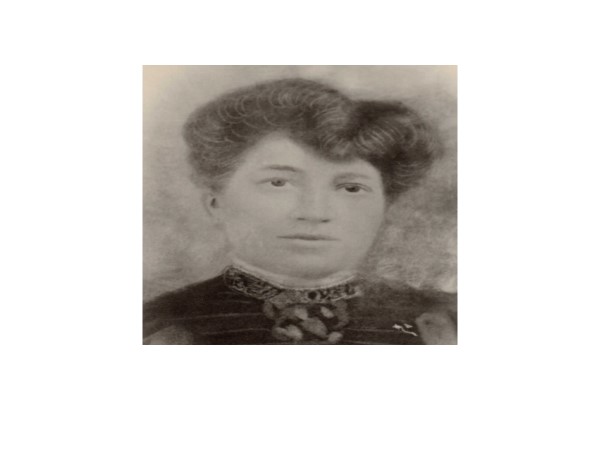
Driving to the next Central Bucks School Board meeting, Lillie crowded my thoughts; as if whispering in my ear, reminding me the value of Teachers. I am in awe of Lillie, a widow who nurtured eight children into self-assured adults. Interestingly, our family includes Teachers among my father’s siblings; and that calling To Teach continues into the 4th generation.
In the early 1900s only a few one-room school houses were scattered in communities surrounding the Doylestown Borough School, the school where my uncles and aunts, who after graduation excelled beyond “ . . . peculiar fitness . . . “. It was the school which graduated a Doctor, a Dentist, a Cleric, a Teacher and a Musician, Blacks whose History would be Erased if the Central Bucks School Board follows the oppressive epidemic sweeping across America.
The Central Bucks School Board is dominated by 6 members whose recent policies have restricted preventative health, denied gender rights, banned books and suppressed freedom of speech. I fear their next agenda is to remove Black History from our District’s curriculum.
My Black History as well as the histories of every Black resident in the Central Bucks School District matters. It is not a curriculum for removal from My Central Bucks High School.

 The Bucks Underground Railroad