Water, Water everywhere and not a drop to drink

Last week a letter dated December 29, 2024 arrived from Jason Carter, Chair, Board of Trustees and Grandson of former President Jimmy Carter announcing “ … my grandfather’s passing.”

I along with millions of people in our nation and around the world, expressed sorrow that Jimmy Carter, the 39th President and longest living President of the  United States had transitioned at the age of 100.

I had joined The Carter Center in early 2000, after traveling to Ghana in 1999. Being of African descent, Ghana had awakened my connection to Anything Africa.

The Carter Center was established in 1982. Its mission statement begins– The Carter Center, in partnership with Emory University, is guided by a fundamental commitment to human rights and the alleviation of human suffering. It seeks to prevent and resolve conflicts, enhance freedom and democracy, and improve health.

Everyone is familiar with the former President’s devotion to Habitat for Humanity. I hope to share with you information  about Guinea Worm Disease—a tropical disease known to many countries in Africa.

What is Guinea Worm Disease?

Considered a neglected tropical disease, Guinea worm disease (dracunculiasis) is a parasitic infection caused by the nematode roundworm parasite Dracunculus medinensis. It is contracted when people consume water from stagnant sources contaminated with Guinea worm larvae. Inside a human’s abdomen, Guinea worm larvae male and female worms mature and grow. After about a year of incubation, the female Guinea worm, one meter long, creates an agonizingly painful lesion on the skin and slowly emerges from the body.

Guinea Worm Disease thrives in polluted streams, rivers, and street gullies across 21 countries in Africa and Asia. In 1986, The Center began to eliminate the disease after Carter had traveled to Ghana and witnessed a worm emerging from a woman’s swollen breast. Unlike smallpox, there is no vaccine or treatment against Guinea worm disease. The Carter Center then and still has partnered with African and Asian health agencies to change rural villagers’ daily life, offering education and prevention on how Guinea Worm Disease spreads, and providing water filters to those in need, and controlling outbreaks with larvicides.

I visited the Motherlands of Ghana, Egypt and Kenya. It was 1999 while touring the capital of Accra, Ghana I realized that not everyone lives with potable water. In Accra and other large cities, unsafe water lingers in canals and gutters. A recent USAID report states only 11% of the Ghanian population thrives on unsafe water.

Although I’d traveled to Kenya in 2009 and 2015, Guinea Worm disease never crossed my radar, even though I’d read about it in Carter Center newsletters. I’ve posted about the Kenyan Maasai several times on my blog, describing their struggles of culture and survival.

Kenya is located on the east coast of Africa. I, Phyllis Eckelmeyer and Alice Sparks, as the Associates with the Maasai Cultural Exchange Project Inc. (MCEP), traveled to Kenya in 2015 visiting the seven water wells which our organization had sponsored. The wells are sited across Olosho oibor, a village of 5,000 Maasai.

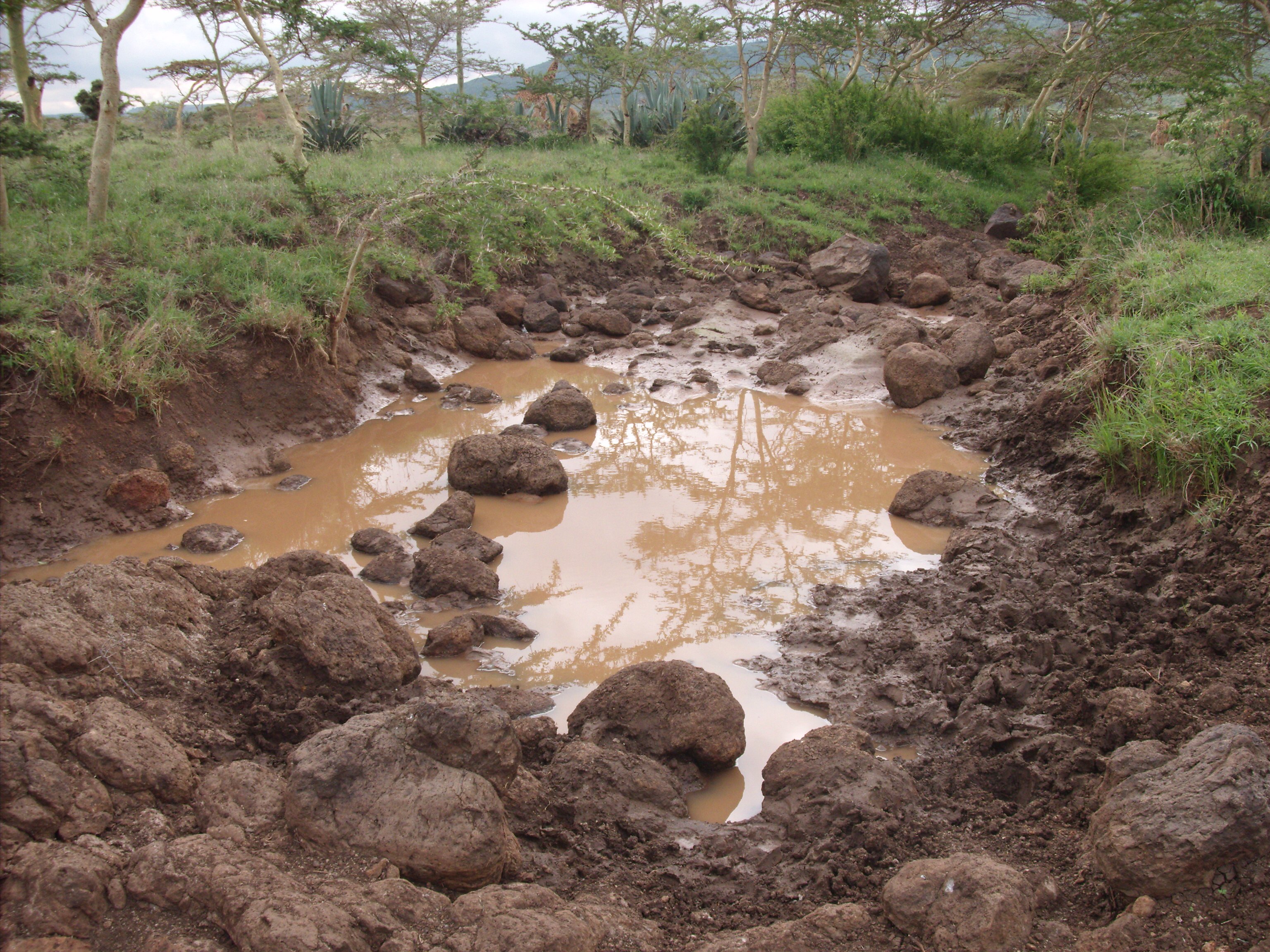
Before there were seven water wells, there were pools of stagnant water (as pictured below). This was the place where Maasai women and often wildlife sought their nourishment. It was common to discover animal waste in or around these pools.
(Doreen Stratton photo)

Days after the start of 2025, I and my MCEP Associates received an email from Francis ole Sakuda, our Maasai NGO partner:

The wells have transformed our Maasai village with education and the youths are engaged in growing tomatoes and onions for local markets, leading to creation of jobs. This has led them away from drug use and alcohol.

President Carter had vowed to eliminate the disease before his death. A few days after he transitioned, a cable news journalist commented that on the day of President Carter’s death, there were only 5 reported cases of Guinea Worm disease.

Kenya had also suffered from dracunculiasis but by 2018 the country was declared free of Guinea Worm.

WATER IS LIFE

Photo by Alice Sparks

Heaven has saved a special place for former President Jimmy Carter.

Don’t Mess with Black History at My School

“ . . . but at last all the other nations of the earth seemed to conspire against the negro race, . . . Thus this race of human beings has been singled out, owing to the accident of color, or to their peculiar fitness for certain kinds of labor, for infamy and misfortune; . . .  a slavery confined entirely to negroes.”

(An excerpt from — The History of Slavery and The Slave Trade, Ancient and Modern

Compiled from authentic materials by W.G. Blake, Columbus, Ohio:

Published and sold exclusively by H. Miller 1860)

******

During my education at Central Bucks High School, the only thing I learned about Black History was: There was a Civil War and President Abraham Lincoln freed the slaves.

Before European explorers stepped on the soil of Africa and discovered those swarthy people with tangled hair and inexplicable dialects, slavery had persisted throughout the ages of civilization. Along with gold and timber, Africans were considered Cargo with an identity less than human, a distinction which still remains four hundred years later.

Unlike immigrants or refugees, or settlers, or asylum seekers who had departed their homelands either through choice or terror, those expatriates often arrived with snippets of their heritage, be it a suitcase stuffed with precious memories, a photograph or a book or a sprout from a mature fruit tree, sometimes with nothing but the clothes on their backs, they arrived in America with Hope.

Africans arrived in America without their culture, their identity, their Freedom nor their Hope.

Growing up in Doylestown prior to the Civil Rights Movement of the 1960s, I failed to comprehend how my skin tone reached back to Africa. “Black” or “African American” or “Bi-Racial” were ethnic identities which never gained preference until after the Civil Rights Movement. Tagging along with my parents on election days, I also never comprehended how my parents’ Right to Vote in Bucks County was not available to “Negroes” in communities across the South. The racial injustice, lynching and riots across the South were also foreign to me, a twelve-year old “colored” girl living in Doylestown, Pennsylvania.

I’m certain I wasn’t alone in my ignorance about my African origin. It was absent in my consciousness until my 1999 visit to Ghana. My Motherland. Since then many other Black Americans have journeyed to the continent in search of their lineage. Just as white Americans travel to their ancestral lands across Europe, Black Americans journeyed to the Motherland and retrieved the  spiritual and cultural inheritance discarded on the beaches of West Africa when our ancestors were shoved in the belly of a slave ship. We returned to America from our Sojourn buoyed with the hunger to search for our African beginnings and fill in the empty spaces of our ancestral lineage.

dsc_7403-1

(Doreen Stratton Photo)

This past July 29, forty relatives spanning five generations of Stratton’s gathered for our third family reunion and to celebrate the unveiling of a Doylestown Historical plaque which was placed on the wall next to our front door.

It was 1887 when my Grandparents—Joseph B. and Lillie A. Stratton—settled and raised their eight children in Doylestown on Ashland Street. My Grandfather “JB” was a veteran of the Civil War, having served in the Union Navy on the USS Calypso; Grandmother Lillie, before she met and married my Grandfather, was a teacher. https://thebucksundergroundrailroad.com/2016/05/21/letter-from-the-civil-war/

My father Sid was the last of the eight children, born in 1900, just four months before Grandfather “JB” died. As the last of the eight he remained at our home where he brought his bride—my mother Dot—and eventually raised me and my five siblings. Today, it is the same home where I and my sister Judith live.

Fragments of my family’s Black History

My father saved pieces of paper that were road maps about our family’s legacy. The family archives consist of prints, maps, letters, receipts and photographs. Some of these items from the collection eventually found their way into a spindle bound, 124-page book compiled by J. Kurt Spence, Researcher at the Doylestown Historical Society. A copy is retained in the museum’s research library.

The walls and rooms of our home seep with memories of joy, tragedy, births and deaths. Whenever I shuffled through old photographs from the early 1920s, my Grandmother smiles, surrounded by friends and relatives she had welcomed in the home. Our only photo of “JB” features an imposing portrait of a proud face enhanced with a mustache and mutton chops. As the years passed, color photographs depict my parents—stewards of the next generation—embracing family and friends at barbeques on the patio, relaxing on the lawns or while gathering around the dining room table, celebrating Birthdays, Thanksgivings and Christmas.

Lillie A. Stratton (Stratton Family Archives)

Driving to the next Central Bucks School Board meeting, Lillie crowded my thoughts; as if whispering in my ear, reminding me the value of Teachers. I am in awe of Lillie, a widow who nurtured eight children into self-assured adults. Interestingly, our family includes Teachers among my father’s siblings; and that calling To Teach continues into the 4th generation.

In the early 1900s only a few one-room school houses were scattered in communities surrounding the Doylestown Borough School, the school where my uncles and aunts, who after graduation excelled beyond “ . . . peculiar fitness . . . “. It was the school which graduated a Doctor, a Dentist, a Cleric, a Teacher and a Musician, Blacks whose History would be Erased if the Central Bucks School Board follows the oppressive epidemic sweeping across America.

The Central Bucks School Board is dominated by 6 members whose recent policies have restricted preventative health, denied gender rights, banned books and suppressed freedom of speech. I fear their next agenda is to remove Black History from our District’s curriculum.

My Black History as well as the histories of every Black resident in the Central Bucks School District matters. It is not a curriculum for removal from My Central Bucks High School.

SANKOFA

News of police stops of African Americans in their cars brought memories of incidents my father had experienced during the mid-1930s through the early 1960s. His band played a lot of gigs in Philadelphia. Every Saturday around 5 o’clock he would gather his sheet music and the case holding his saxophone, and drive into Philadelphia where they performed at different clubs. Coming home to Doylestown, at 3 or 4 in the morning, he would be pulled over on 611 just south of home. Always by the same cop.

And always with the same interrogation: The cop asked for his driver’s license and registration. Then he’d ask where was he coming from and where was he going. He responded politely with the same answers. After I and my five brothers and sisters reached our teens, my father would caution us about behaving properly out in public: “Be respectful and never draw attention to yourself”. We failed to understand why he told us to “behave”. We always behaved.

Years later when an adult, Daddy had shared with me the police interrogations. I tried to imagine what else, as a Black man driving those country roads and city streets at night had he been subjected to? No wonder he gave us “the talk”; he was probably terrified that something like that would happen to us.

We were raised in Doylestown which in the mid1950s was a sleepy community of just over 5,000 people. It was a time when my family was called “colored”. The term “Black” was still years away, as was the ethnic term “African American”. There were only eight “colored” families in the Borough. We jokingly described ourselves as Raisins in a Sea of Rice.

As siblings of color when we stepped out the door, we walked into a milieu where our lives interacted with a majority of white friends.

I’ve often wondered how my family’s life would have been different if we had grown up in either Mississippi, Georgia, Alabama, Arkansas or Virginia or elsewhere. But we grew up in Doylestown, Pennsylvania where only on rare occasions the ugliness of racism reared its head. There’s only one time I can remember being called a “N****r”. As a 10-year old tomboy I picked a fight with a boy after he called me the “N Word”. I won the battle of our fisticuffs under the merry-go-round, surrounded by shouts of kids taking sides for me or him. I was banned from the playground for a week.

Since George Floyd’s murder the loudest voice for change is recognizing education’s failure to include 400 years of African American history and culture in our public schools.

The illustrations on my 1st Grade reading primer featured Dick and Jane, Spot the dog, Mother and Father, the mailman, the police officer and the fireman. I never gave much thought that this 1949 primer showed white faces on every page. Now the current introductory readers have progressed to reflect the faces of America’s diversity.

In my 5th Grade McGraw-Hill Geography text, the awareness of my skin color was reflected back at me from a page devoted to the African continent. The hand-drawn illustration remains embedded in my mind: An African child crouched in a hole with arms hugging his knees. Only the crown of his head is exposed. The African plain of tall grass in the distance is on fire and rages toward the boy in the hole.

The brief narrative accompanying the image explained that as the fire burned through the grass and reached the dugout protecting the boy, it singed his hair. The caption explained how Africans’ hair became “curly” as a result of the fire that raged across the African plain. My two sisters—one older and the other a year behind me, also remember that image.

During 1965 through 1975 I lived in California. Even at that time there was a diverse racial population. Often, I was asked, “What are you? Mexican? Philippine? Hawaiian? Native American? Who are you?”

This was the period of the Anti-War protests, Black Power and the Civil Rights Movement.

Not until 1999 after a journey to Ghana, a country on the West Coast of Africa, did I discover “Who” I was. When my feet touched this African country for the first time, the air embraced me with an aroma heavy with the psychic energies of Black and Brown civilizations. Three more times I would travel to Africa and each time the Motherland welcomed me with its pungent odor.

The frightened African boy hiding in a hole? Gone and replaced with my anxiety as I stepped carefully along a stone passage into the underbelly of a massive fortress built in 1653 by Swedish traders. Cape Coast Castle logged timber and mined gold before the lucrative trade of Africans, already a success in other fortresses constructed during the late 1500s.

Captured Africans were kept in a dungeon with stone walls that rose nearly 30 feet, with sunlight slipping in through one small window near the ceiling. The floor measured approximately half a basketball court. Standing near a wall, I listened as the guide described how hundreds of male Africans were crowded into this space before herded through a passageway onto the beach, then loaded on to a ship, bound for the New World.

I moved closer to the wall and ran the palm of my hand across the smooth blocks, wondering if the African DNA in me could’ve struggled for survival while cramped in this suffocating prison. I inched my fingers between two blocks and scraped granules of detritus into my hand, wrapped them in a tissue and brought them to America. They are more than what my ancestors carried when stolen from the Motherland.

It’s been 400 years since slave traders hauled human beings out of Africa. We survived the captors, the Middle Passage, bondage and the struggle for Freedom. Now is the time to sit across from one another and solve our differences.

There is a Ghanaian word spoken in the Twi dialect: Sankofa. It means “Go Back and Get It. The hen reaches back for the egg symbolizing that before knowing Who you are, you must first learn Where you came from.

Black Lives Matter

“… Great Again” Really?

Since the infamous “shithole” statement uttered by the President of our United States, the print and cable commentators have reminded us that Trump’s 26% hard core voters are probably applauding yet another racist utterance from his mouth.

I live in Doylestown Borough where during the 2016 campaign season there were LOTS of Trump signs planted on the front lawns of homes. Pennsylvania went for him but the Borough went for Clinton. I wonder how many of those Trump voters in my community still support him, even as he continues to lack dignity or sanity. And I wonder how many Doylestown hard core Trump groupies hate Americans who are Black, Brown, Red or Yellow? Like me.

Six years ago a letter to the editor by a local woman was published in the “Intelligencer”. Christmas, the day of Good Will was a couple weeks away when she wrote:  “Santa Claus used to be a big fat man with a long white beard. Now, he is a skinny black man in a big white house.”

The paper published my rebuttal. As a ‘skinny black woman’, I invited her to engage in a dialogue about race. When a friend offered to facilitate the meeting, the woman declined. Instead she suggested I “go back to Africa.” Chalk up at least One Racist in my community.

Having traveled to the African countries of Egypt, Ghana, and Kenya, it is complicated when the president brands those nations and others as “shithole”.

Five hundred years ago European nations landed their ships on West African shores. They plundered Africa’s natural resources—humans included—shipping them back to countries in Europe, South America, America, or the Caribbean.

The mid-20th Century brought independence to African nations across the continent. After years of observing how their conquerors’ ruled, some African leaders chose to emulate their predecessors when ruling their freed people.

A few African rulers attempted to bring True Democracy. Last year I learned my African DNA traces to Ghana. When I traveled there in 1999, it captured my soul as soon as I planted my feet on its soil. That country–similar to all African countries–holds rich cultural histories that reach back thousands of years.

In 1957 Ghana was the first country liberated on the continent from the colonialists. Its first Ghanaian Prime Minister was Kwame Nkumah, educated in America. In its capital of Accra, there is a monument erected in honor of Kwame Nkumah.

While China crawls throughout the African continent grabbing its treasured minerals, America is led by a fool who continues to lie and who dismisses the second largest Continent on Planet Earth. Chinese funds constructed that monument to the first African Prime Minister who adopted American Democracy. During my 2015 sojourn to Kenya I traveled across roads built by China. China also funded the construction of the rail line from Nairobi to Mombasa.

For this American president demanding Africans stay “… in their huts” proves again his ignorance to America’s reputation around the World and his complete absence of empathy.

The Rev. Martin Luther King, Jr. and all the Freedom Marchers are weeping down on us from Heaven.

Washington DC Monument to Rev Martin Luther King, Jr.