Green Acres

_DSC8423[1]“A Native American farmer in Bucks County is about to lose his farm”.

That telephone tip came my way three years ago this month. It concerned 145 acres known as theThorpe First Nation Family Farm. Currently owned by Dale and Renee Thorpe, the farm has been in the family for five generations and was in financial trouble with its mortgage holder. Much has happened since I got that phone call. In January of this year I posted a blog–Takin’ it to the court–highlighting the early struggles that brought together a hundred activists (including Native Americans) to save the Thorpe farm.

The Thorpe’s were determined to keep their farm. They petitioned Philadelphia Bankruptcy Court where they’ve appeared on and off over the last two years. At every turn the bank’s attorneys (Susquehanna, now BB&T Pavilion) fought them. Reluctantly, the Thorpe’s decided to sell off a separate parcel of 48 acres which would solve their mortgage problems. An interested prospect offered $1.2 million for the parcel and then strangely, withdrew the bid.

This past summer the bankruptcy  judge ruled that in order to satisfy the bank loan the entire farm must go up for auction. The auction was held on September 16. Bidding was swift. Surprisingly, for a paltry amount of $1.7 million the bank accepted a bid for the entire 145 acres which included the outbuildings, the family’s home and all the livestock. Equally surprising, the beneficiary of that bid was the same man who had previously offered to buy that 48 acre parcel at a slightly less amount but had changed his mind.

The Thorpe’s have appealed the accepted bid. States Dale Thorpe in a December 3, 2015 article published in the Bucks County Herald, “I think this sale was orchestrated. It sounds like collusion to me.”

Until a ruling is made on the auction bid, Dale, Renee and their five children remain on the farm.

The appeal of the auction bid isn’t the only legal action they’ve taken to save their farm. On October 28, 2014 a Civil Rights lawsuit was filed in Philadelphia 3rd District Federal Court against Upper Makefield Township Supervisors. The suit lists multiple instances where the township had served unfounded zoning violations against the farm. Within the past two weeks the judge–Honorable Cynthia M. Rufe ruled the suit should go forward. Attorneys on both sides have begun discussions.

There’s an ironic twist to this struggle that involves the Upper Makefield Supervisors. At the December 1, 2015 the Supervisors considered a proposal about a 30 acre farm threatened with sale. They voted to purchase 24 acres of the farm in order to establish a conservation easement. I am bewitched, bothered and bewildered to figure out where the township’s responsibility is in serving their constituents.

Supporters for the Thorpe’s continue to stand with the family. The farm is sacred ground where once a tribe of the Lenape Nation lived, hunted, fished and are buried. The land has historical significance as it was the starting point for the William Penn Walking Purchase. Dale Thorpe is a distant relative to deceased Olympian Jim Thorpe. As a boy whenever he walked the farmland he would discover arrowheads in the soil. His tribal heritage includes Lenape, Sac and Fox Nations.

The December 19, 2015 front page of Lancaster Farming published an in-depth interview with Dale Thorpe about the issues surrounding the financial and operational challenges facing the farm. The facebook page, Save Thorpe’s First Nation Organic Family Farm is the hub for updates to the cause. A supporter also created a gofundme page to raise money for the legal appeal of the auction bid (www.gofundme.com/festival of fears).

This is not over.

This is not over.


“27W — Line 17”

Lt. William S. Geary USMC

2nd Lt. William S. Geary, USMC

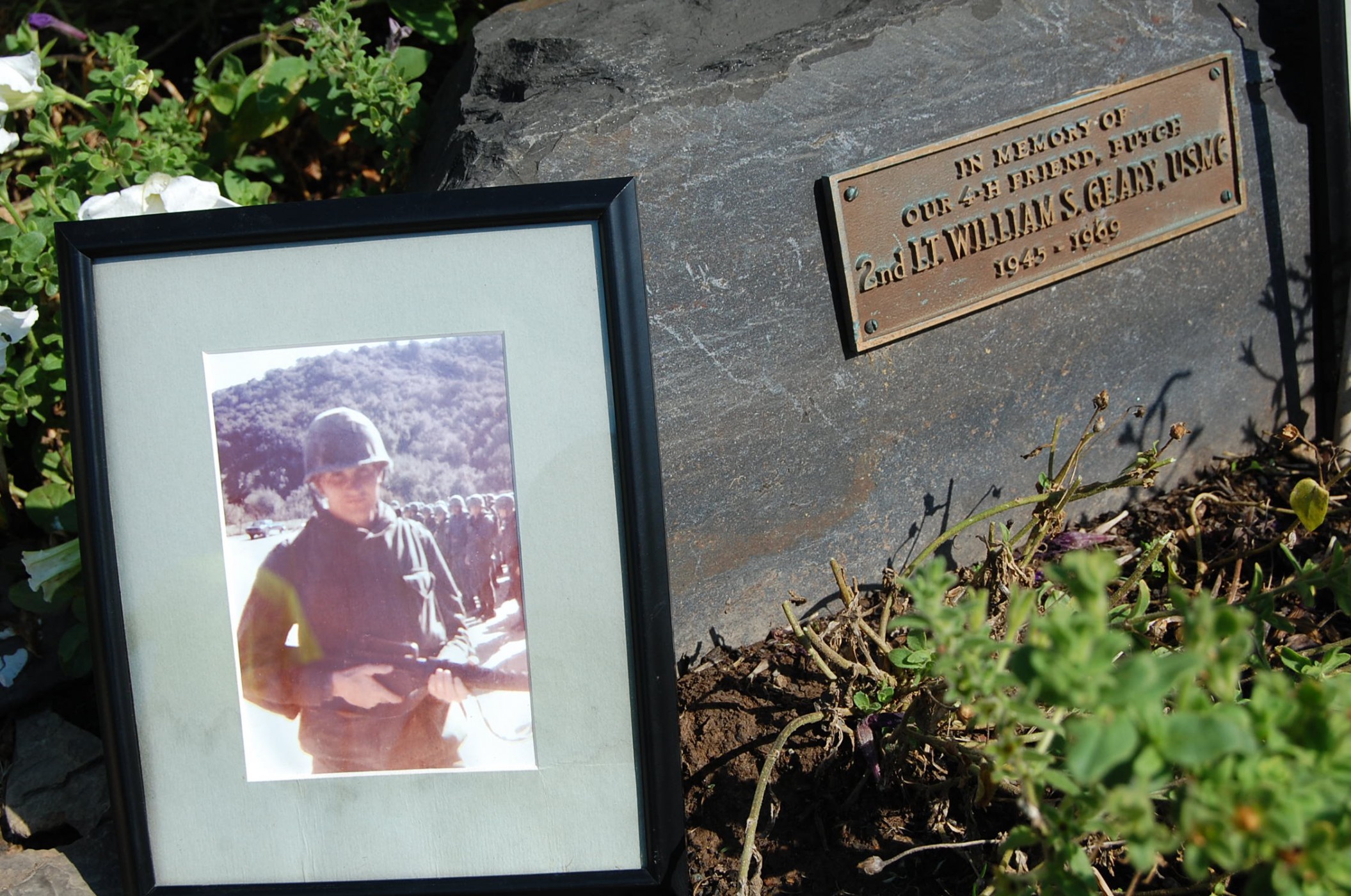
It was 2007 when a worker, mowing the grass on the grounds of the Middletown Grange located in Wrightstown, Pennsylvania, discovered a gray stone nestled at the bottom of a slope near a trickling stream. Imbedded in the stone was a small brass plaque with the words:

In Memory of Our 4-H Friend, BUTCH

2nd Lt. William S. Geary USMC 1945-1969

After many inquiries by the Grange to the Bucks County 4-H, it was learned that Lt. Geary who resided in neighboring Montgomery County was a member of the Bucks County 4-H Club.  His projects included raising goats and rabbits, mentoring younger 4-H youth and working at farms near his family’s home in Penns Park, not far from the Grange Fairgrounds. After his former 4-H members learned of his death in Vietnam, they arranged for the bronze plaque to be imbedded in the stone. There they had gathered at that quiet site to pay homage to their friend.

The Grange then decided that the stone should be moved from its setting and placed in a conspicuous site that would be more visible to the public. The Penn State Extension Office of Bucks County was contacted again and asked to designate a 4-H Club to take on the project of building a memorial garden for Lt. Geary. It was a given then that the 4-H Goat and Sheep Clubs would enthusiastically take on this task. Because a Penn State Master Gardener was also required to oversee the project, as a Master Gardener I jumped at the opportunity. Having researched and published articles about Vietnam about the eight nurses who died during the war as well as subsequent pieces about men and women veterans, the project became a personal duty of honor for me.

On August 13, 2008, at the opening ceremony of the annual Middletown Grange Fair held in Wrightstown Pennsylvania, the memorial was dedicated to 2nd Lt. William S. Geary, killed on April 5, 1969 in Da Nang Vietnam. Over two hundred fair goers including 4-H club members, veterans and the Geary family were in attendance. Butch’s best friend in high school, Steven Daniels the Chief of Buckingham Police as the Keynote Speaker gave a moving tribute to his “… best friend” and had kept up a correspondence with Butch after he had joined the military.

As there’s a story behind every name etched on the Wall, Lt. Geary–known as Butch by his former 4-H brothers and sisters–graduated from Council Rock High School in 1963 and entered Temple University on a Senatorial Scholarship. His leadership qualities that were honed during his 4-H years came to fruition at Temple. He was vice-president of the Young Democrats, president of The Newman Club and a member of the Men’s Chorus. He was studying law but after his 1968 graduation and with the escalating war in Vietnam, he joined the U.S. Marine Corps.

A Platoon Commander with the First Marine Division, it was on April 5, 1969 when his unit, part of a battalion operation south of Da Nang came under heavy gunfire. It was during a maneuver of his troops away from U.S. air support that he was mortally wounded by sniper fire. Lt. Geary was awarded the Bronze Star, the Purple Heart, the Order of Valor and the Gallantry Award.

????????????????????????????????????

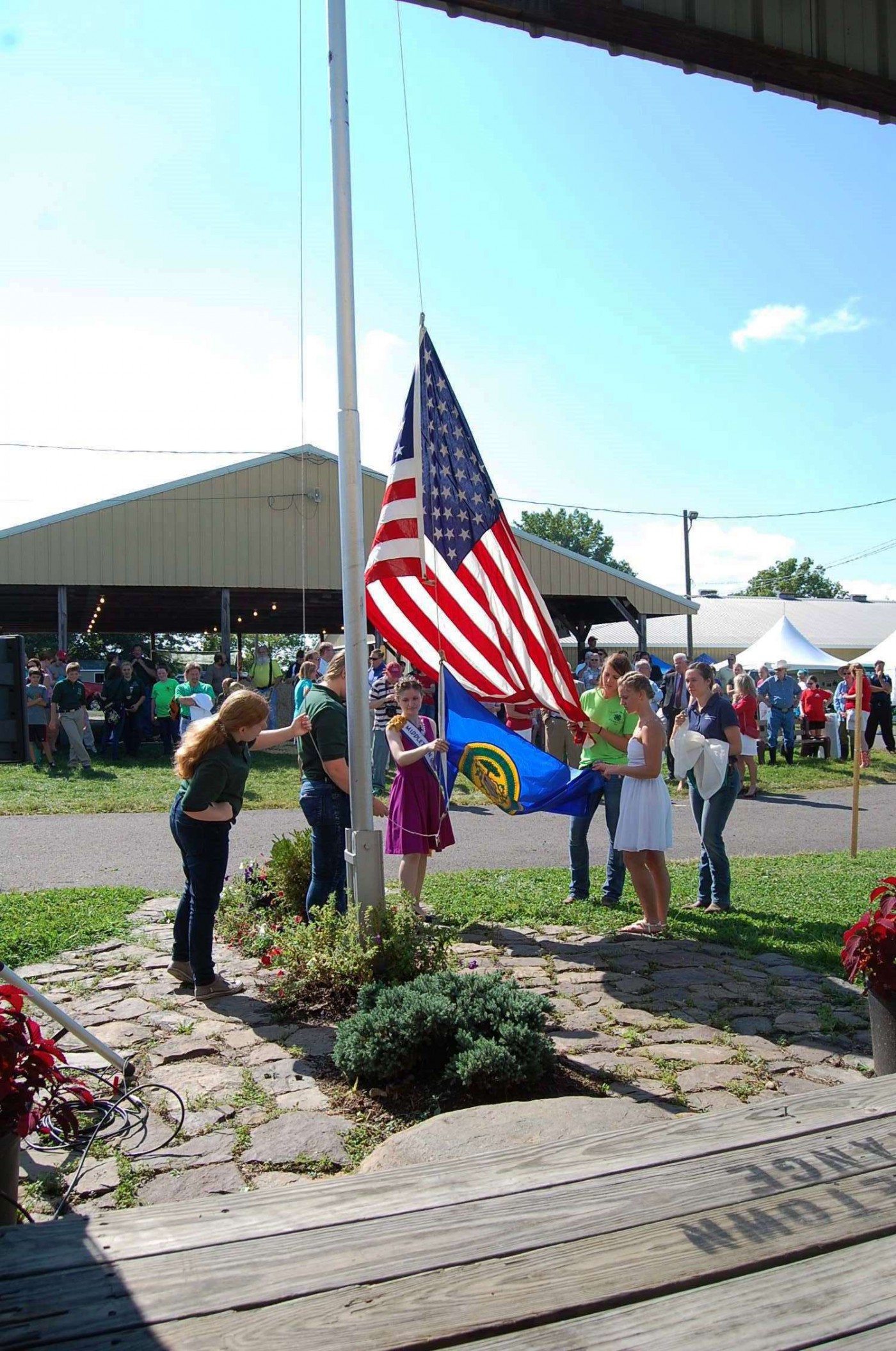
2015 Opening Day at the Middletown Grange Fair

His mother, Polly Geary offered the flag that had draped her son’s coffin at his burial to be raised at this first memorial ceremony. She then donated his flag to the Middletown Grange which each year since 2008, those stars and stripes have been a part of the opening ceremony at the Fair.

On your next visit to the Wall, be sure to seek Panel 27 West, Line 17 and reach out and touch Butch Geary to honor his sacrifice.

On this Veterans’ Day, thank a Veteran for his or her service.

Racing to the Moon

Heard that Newt Gingrich was in Doylestown couple weeks ago–this his second visit to our sweet hamlet. Reminds me of the prophetic statement he made during his failed 2012 campaign for President. He announced that by the end of his second term (2016) that  ” … we will have the first permanent base on the Moon and it will be American”. Then he declared that the Moon would become “… our 51st state.”

Moving past Newt’s second visit to Doylestown takes me back to 1967–which now seems like a lifetime ago. I was living in Fairfield, California and working at a company called Explosive Technology, Inc., known by its acronym “E.T.”. A search on the internet won’t bring up E.T. because it’s no longer in business. During the mid-60s through early 70s this R&D manufacturing company, located on the grounds of a dismantled Nike missile station, contracted with NASA and the Defense Department.

A product they delivered to the Defense Department was an explosive device that ejected the pilot’s cockpit seat thereby parachuting him safely to the ground.

E.T.’s contributions to the space industry are lost among America’s Right Stuff legacy about the first manned flight brilliantly celebrated in the film of the same name. E.T. designed and manufactured an explosive cord that separated the Saturn rocket stages as they blasted into space.

moonwalk82820125[1]I was among millions who remember being glued in front of our TVs during the July 29, 1969 Apollo Space Program’s first  successful Moon landing. Having worked at one of several sub-contracting companies that produced this historical technology, it was thrilling television. There they were–two American Astronauts bounding weightlessly across the Moon’s gravity-defying surface.

At the completion of their experiments the two Astronauts re-entered the LEM (Lunar Excersion Module). Safely latched inside the LEM one of the Astronauts flipped a switch that triggered an explosive charge that rapidly snapped together two razor sharp blades that cut the cables that attached the LEM to their small rocket craft. That rocket lifted off from the LEM blasting upwards to rendezvous with the Mother Craft circling the Moon above them. The device that separated the Astronauts from the LEM  was an explosively charged unit called the LEM Guillotine Cutter. Brilliantly designed by an E.T. engineer, it was about the size of a two-hole punch. It was the fail-safe unit that safely carried the explorers off the Moon

Some of our Moon hardware did not return to the circling Mother Ship. Besides the American flag that they firmly planted into Moon’s silky soil also left behind were pieces of discarded materials no longer useful but critical during the Astronauts’ lunar survey experiments.

My best friend who also worked with me at E.T. often joked how the USA was the first country  to leave Trash On The Moon.a12_ls3_lg[1]

Newt’s empty vision of a USA Moon colony never happened. Yet I still get excited when the media announces new discoveries from outer space. Our space explorations and technology continue to bring breathtaking photographs from our solar system including those  explosions happening on the sun, along with those craggy craters, dry river beds and mysterious images transmitted back to Earth from moons circling those far-away planets beyond Mother Earth.

NASA predicts Lunar excursion rovers will be dropped on the moon by 2020. Not sure if I’ll be above ground to witness those images. But–I remain hopeful that China and Russia–already with their own flags planted on other parts of the Moon will not start a ‘conflict’ up there.

May Science and Technology Always Be With Us.

And not war.


Trampling on Native Heritage

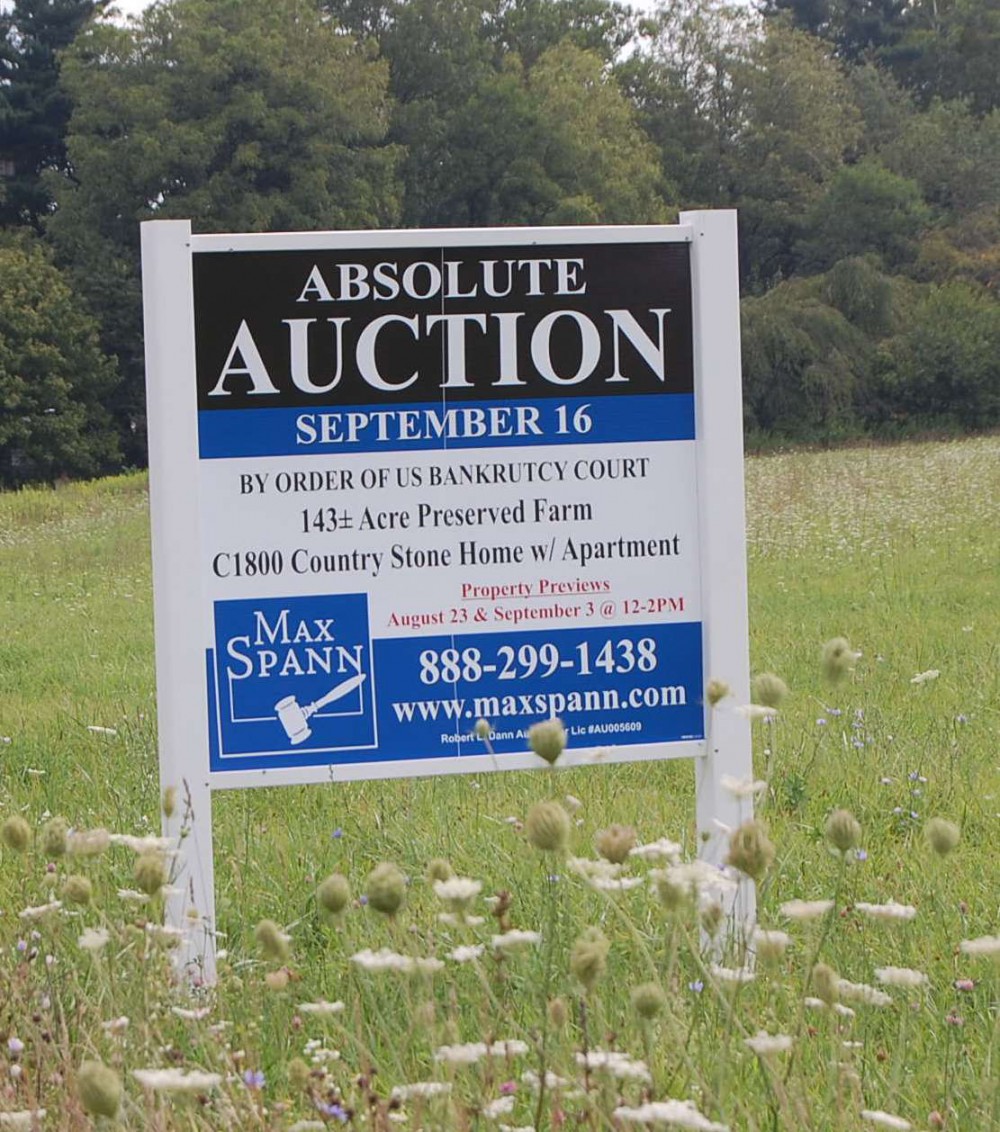
DSC_1882For the times I’ve volunteered at the Thorpe First Nation Family Farm, I’ve been aware of the Thorpe’s struggle to keep their land from getting sold. This past August a sign announcing an auction for September 16 was planted in the farm’s field across from the parking lot. The auctioneer–Max Spann–notified the media with a press release for two dates when interested parties could travel to the farm in order to walk the land and tour the family’s farmhouse.

Thursday September 3 was the second and final opportunity for speculators to check out the property. I went to the Farm to take pictures and get a sense of the people who were there to gain information about this 143 acre piece of land that has been in the Thorpe family for 5 generations. As a friend and supporter to the Thorpe’s it was unsettling to observe strangers strolling around the property, peeking inside the farm’s outbuildings (strictly off-limits for this preview) and watching as other strangers were greeted by a realtor at the door of the farmhouse before showing them through the comfortably warm rooms of the Thorpe’s home.

October will mark three years since two disasters hit the farm. On October 13, 2012 a suspicious barn fire destroyed the building where all the machinery, tools and Native American artifacts were stored. Then seventeen days later–on October 30–Hurricane Sandy tore off the roof of the Market.

Tragic.

A few months ago, as some supporters gathered at the Market, one remarked to me, “I feel Louise is here today,” She was referring to Louise Leckner, a hands-on healer who volunteered her gifts at the first Farm event held in February 2013. It was organized by a newly formed group of people whose goal was to Save the Thorpe First Nation Family Farm. Although a section of the Market’s roof was covered with tarp, the Thorpe’s decided to keep the doors open to bring in needed revenue. On that day, besides Louise, there were Native American drummers, storytellers and crafters bringing awareness to visitors about Native culture and heritage. Sometime during the middle afternoon Louise experienced a feinting spell that rendered her unconscious. 911 was called staying on the line to give instructions over the phone to a First Aid trained person. Almost half an hour passed before the ambulance arrived. Louise never regained consciousness and several days later on February 16, 2013 she died in the hospital.

A month later the Market was served with notice from the Township to close. Renovations began and the Market was approved for reopening in September 2013,.

picture one

Louise Leckner (photo from Bucks County Courier Times)

A lasting result of Louise’s death was Upper Makefield Township government’s approval to place an EMT Station in their Fire Department. Through Louise’s passion as a healer and her sudden death, citizens of Upper Makefield would live because an EMT was now in their community.

My first post of 2015, Takin’ it to the Court recounted the last two years of supporters’ efforts and the Thorpe’s struggle to keep the bank from the door. The post also mentioned a Civil Rights lawsuit filed by the Thorpe’s attorney on October 28, 2014 in U.S. District Court for Eastern District of Pennsylvania against Upper Makefield Township. The suit details the excessive zoning violations wrongfully placed against the Farm.

While walking the grounds two days ago, taking pictures and observing the ‘lookie-loos’, I  felt the presence of Louise. It gives me hope that the Thorpe First Nation Family Farm will not be lost.


Cecil: “Simba”

“Did you ever kill a lion?”

That question was always asked by children wherever and whenever our Kenyan Maasai friends spoke at presentations on behalf of the Maasai Cultural Exchange Project’s visits inside numerous Bucks and Montgomery  County schools. I was reminded of their curiosity when the outrage blew up after the killing of Cecil the lion by that big game hunter.

Those children’s innocent pursuit for knowledge led me to contrast the tortuous slaughter of Cecil the Lion  with the Maasai’s decision to disband their ancient tribal custom of killing lions. Years and even generations before big game hunting in Kenya was banned in 1977, this indigenous tribe killed lions to establish their bravery as Warriors. However, after diseases such as rabies or canine distemper and the rise of unlawful poaching, the Maasai began the practice of olamayio, the Maa word that means ‘Group Hunting’. Now the Maasai hunt to kill lions only when the animal suffers from those diseases which could threaten their cattle, goats or sheep.

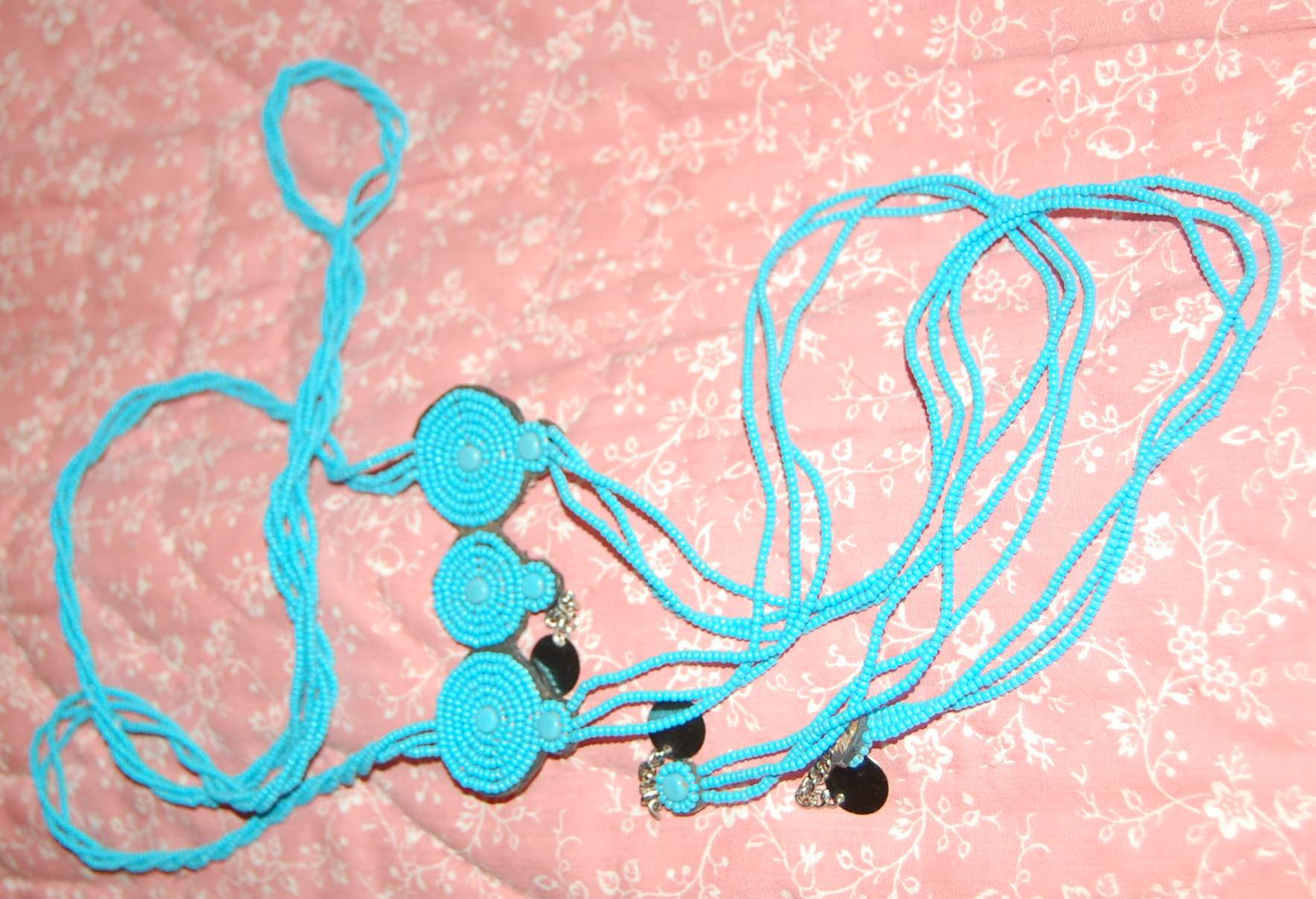
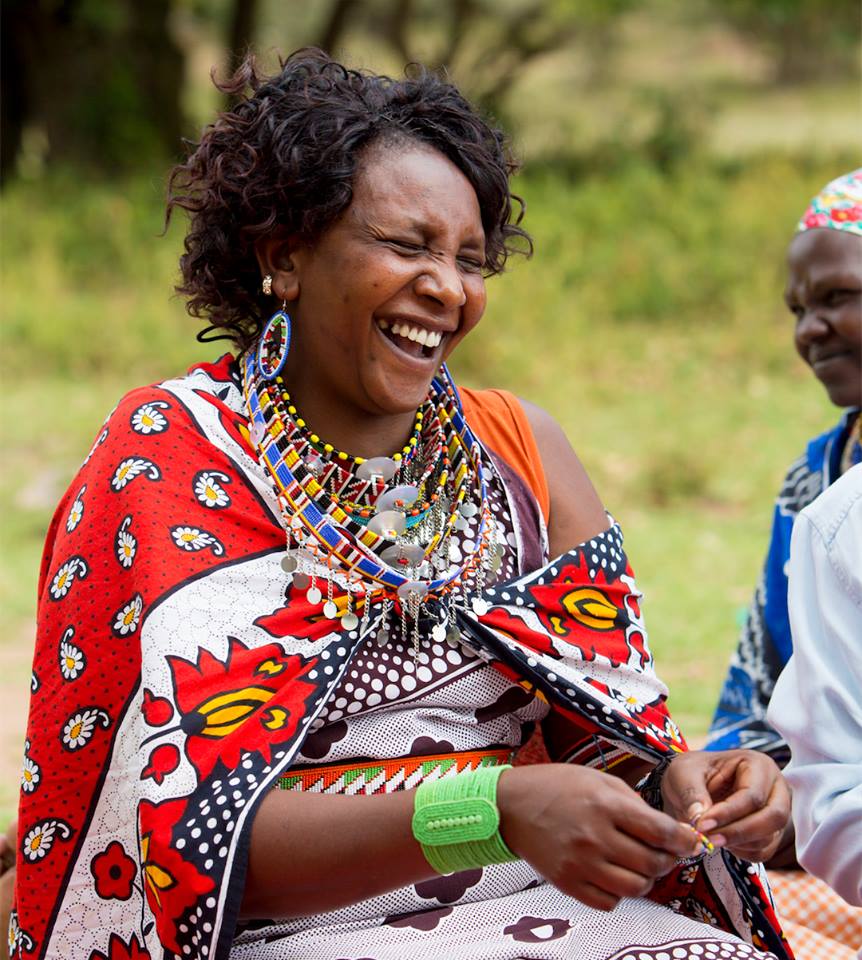
This piece of Maasai jewelry is called 'issurri'. It is a special ornament worn only by mothers whose sons are going through the Rite of Passage, also known as Warrior-hood (moranship)

This piece of Maasai jewelry is called ‘issurri’. It is a special ornament worn only by mothers whose sons are going through the Rite of Passage, also known as Warrior-hood (moranship)

Olamayio, is also practiced in the Maasai ‘Rite of Paasage’, the cultural ceremony where young males become adults through their transition to Warriors. The ritual no longer ends with the killing of a lion. Instead whichever boy in the group runs the fastest to reach out and grab the lion’s tail receives the honor of Warrior, thereby representing all the other boys in the olamayio who  complete their ‘Rite of Passage’ with him. More importantly the Maasai don’t eat the meat of lions or any wildlife, limiting that aspect of their diet to goat and beef.

The NGO we partner with–Simba Maasai Outreach Organization–is committed to preserve wildlife in the land surrounding their Olosho oibor village. The Lioness–the identifying name for females–is never hunted because her role is to ensure the continuation of the species. The Maasai’s reverence for the lioness is reflected in a true story that occurred several years ago in Olosho oibor: A lioness protected a lost child until found by the villagers. In time I believe this incident that is already a legend throughout Olosho oibor will become a Maasai folktale the elder women will tell over and again to their grandchildren.

The outrage since Cecil’s death remains loud and worldwide.  Researchers at Oxford University in Great Britain had for over ten years observed Cecil through a tracking device on his neck as he roamed the terrain in Zimbabwe’s National Park. Now that’s lost. Positive reactions include more awareness about the threatened loss of wildlife in Africa and around the globe. Some airlines will no longer transport carcasses of killed wildlife in the belly of their planes. Zimbabwe is attempting to extradite dentist Walter Palmer to their country to face charges for his “illegal” kill. The dentist remains in hiding since his hunt/kill of Cecil.

It’s about ‘Time’

President Obama’s speech on July 14 to the NAACP Convention in Philadelphia about the failed criminal justice system recalled a commentary I wrote in 1992 when editor of The Keystone Veteran, a quarterly newspaper of Pennsylvania Vietnam Veterans of America (VVA). VVA is the only veteran’s organization that advocates for veterans behind bars.

My commentary, ‘Paying Now or Paying Later’ was published after rumors began flying that our Pennsylvania legislators were considering the closure of a hundred year old school that had been graduating students who went on to higher education.

Scotland School for Orphans of the War is located in Franklin County—south of Harrisburg. The school was established as a boarding school to educate orphans whose fathers had ”… died in the War”. My father and his brothers, sons of a deceased Civil War Navy veteran, would attend Scotland, living on the campus every school year through to graduating from the 12th grade. The school was overseen and received funding from the state. However the school also enjoyed support from hundreds of veteran groups throughout Pennsylvania. Because I edited the Pennsylvania’s VVA quarterly newspaper, circumstances in 1991 found me escorting my father back to his alma mater where he’d not set foot since his 1918 graduation.

Open to children across the Commonwealth, by 1991 very few of the students attending Scotland School had relatives with military service connections. Although there was an aggressive statewide recruiting campaign to enroll youngsters from around Pennsylvania, most of the students attending Scotland came from Philadelphia. Back then it cost close to $25,000 per year to educate and house a Scotland School student. The Harrisburg lawmakers were concerned about this yearly cost per child and that a majority of the student population came from Philadelphia. Many of those city children suffered from learning disabilities or behavior problems–liabilities that in any school require one-on-one attention

In ‘Paying Now or Paying Later, I wrote: Students may also carry the additional hurdles of deteriorating neighborhoods or streets filled with drugs. These are the children who are candidates for the next generation of the $80,000 a year inmate.

The following year I attended Scotland School’s 1992 graduation ceremony where 26 of the 29 graduates (one was a Caucasian)  had been accepted at colleges, junior colleges or technical schools. A few weeks after that graduation I attended a similar ceremony—this one inside the walls of the State Correctional Institute at Graterford. One hundred and eleven men (a few were Caucasian) received diplomas for GEDs, Vocational Certificates and Associate Degrees. One inmate received his Master’s; another received his Bachelor of Arts.

Around that same time a segment appeared on ’60 Minutes’ about inmates receiving federal grants to further their education. Within days of that segment federal legislation put that to a stop. Now inmates wanting to further their education must pay for it themselves or with the help from friends or family. Since then, it just got worse. Mandatory Sentencing, as President Obama described, has made America the country with the most imprisoned people—mostly black–who are serving time for offenses that would keep them locked up for years.

I’d heard and read that a “lot of black people” were locked up in prisons. My reality check came in 1989 when VVA held a State Council meeting inside SCI Graterford. The administration allowed 70 inmates (all veterans) to attend the meeting in the prison’s auditorium. There were only three white faces out of those 70 inmates. It was the same at other state prisons I entered: overwhelmingly black faces. Everywhere.

In 1989 there were less than 10 state prisons in Pennsylvania. Now there are 24. The passing of the Mandatory Sentencing law has been a gold mine for the prison-industrial complex. I never understood why they insisted on using the word corrections to define our prisons. They’re not correcting. They’re punishing. A lifer I know when describing the changes he’d seen in his 35 years at Graterford would begin by saying, “Since coming to this plantation …”

Scotland School closed in 2009. A couple years ago I had a conversation with a man who retired after a career in the juvenile probation and parole system. He shared with me that there was an opportunity for Scotland School to come under the umbrella of Hershey School. In 2013 Scotland School was purchased by the Winebrenner Theological Seminary for $1.8 million.

Distressed neighborhoods in Philadelphia continually deteriorate from poor schools, drugs and violence.

“The Sins Committed In The Name of Progress”

Another CH construction picMy February 9 post, Preservation Zero. Progress One featured Addison Hutton, the architect who designed the 19th Century Bucks County Court House. On February 17, Grafitti on East Court Street promised to write about the protesters who painted THE SINS COMMITTED IN THE NAME OF PROGRESS on the construction fence surrounding the demolition site of the old Court House. With a large can of black paint and some brushes, three teenagers plastered the message on the entire length of the fence along E. Court Street, from Broad Street down to the intersection where the streets of Main, Shewell and Court finger away in different directions.

The image above appeared in my February 17 post.

Somewhere there is a photograph that was taken within days after “THE SINS …” graffiti was discovered on the fence. It possibly was published in The Doylestown Intelligencer (now called The Intelligencer), according to a persistent researcher at the Doylestown Historical Society who found a third or fourth generation image in the Spruance Library’s microfiche collection.The photographer must have snapped the picture from the second or third floor of the old Doylestown Boro School which was located catty-corner at Broad & Court Streets. The words are invisible in that image. After inquiries to other historians, former and current publications, and a post on the ‘Growing Up In Doylestown’ facebook page, I came up empty in my search for that photograph.

Over 50 years ago the buildings across the street on East Court Street that face the Court House were homes to Doylestown families. If you walked on the pavement after 10 on any given evening it was typical to find no lights at all shining from the windows of those homes. And as you walked not one human being would cross your path. Now the homes are attorney offices. On this particular July 1958 night, three teenagers decided to make a statement about the loss of the nearly century old County Court House that was being demolished to make way for a more “modern” building.

I spoke to two of the three artists: Ed Greiner and Anne McHugh. Anne who lives in New Jersey apologized for not trusting her memory about this incident that happened 57 years ago. She did however get me in touch with Ed who now makes his home in Maine. The three of them were able to accomplish their task on a dark July night in 1958. Their only fear had been  the prospect of getting caught by their “arch enemy” – Doylestown Police Officer George Silk. Officer Silk often stopped young people who were walking around town after dark; so this midnight excursion was a bold move by the three of them. Not anywhere close to being “juvenile delinquents”, if caught the prank might have been considered Destruction of property or Vandalism.

They hurriedly slapped the words “THE SINS COMMITTED IN THE NAME OF PROGRESS” across the fence along E. Court Street. In a letter to this blog, Ed confessed, “I did drop an ‘M’ or else a ‘T’ from committed, but I was never a strong speller. I made up the statement (maybe). We probably may have had a getaway car and driver.” Ed gets his activism from his mother, Martha Darlington, best described by Ed as a “preservationist”. He recalled how she was a faithful attendee at the County Commissioners’ meetings where she expressed her opposition of losing this iconic structure to the wrecking ball. Each time she spoke during public comments, Ed said “… she was steamrolled”. His mother was one of those Doylestown citizens who pitched in around town when something needed to be done. “Once”, Ed told me, “She gathered some people to go into the woods surrounding Font Hill to clear away underbrush. “She even recruited a Boy Scout troop to help.”

Ed also recalled how back in the day the expanse of lawn surrounding the Court House was a venue for band concerts. At that time there was only one memorial on the lawn, a World War I fountain with two soldiers–one cradling a wounded soldier. After the new court house was built the fountain was relocated to the corner of North Main and Broad Streets. The lawn is now a place with memorials to five wars and a sixth to fireman killed in the line of duty.

Within days after its appearance, local residents would stand in front of the fence, arms crossed in front of them as they silently stared at the message. Before a week had gone by the message was covered over with dark green paint. I smiled every time I walked past the fence because looking closely, the three protestors’ message was still visible. It was a half-ass attempt to suppress a statement that in the 21st Century could be painted on demolition fences  surrounding old treasured buildings or land speculators bulldozing farmland.

Elizabeth Biddle Yarnall, the niece of Addison Hutton, described her uncle in her biography of him as a “Nonconforming Quaker”. Addison would be pleased that almost a hundred years later, three teenagers admired his vision enough to pay homage to him with a classic graffiti statement.

Leah Lato: Also known as “Mama Leah”

Leah on Free the Children siteOn the left is a photo of Leah Lato taken from the facebook page of Me to We, a program of the Canadian organization Free The Children. Along with this image is a post written by a program volunteer praising the work of ‘Mama Leah’, my final interview of Maasai women who are making positive differences in their community. Read more about Me to We below.

On our last evening in Olosho oibor we are invited for dinner at the compound of Leah and husband John ole Sakuda. She is John’s first wife in a polygamous marriage with 2nd wife Susan Sakuda, featured in the April 2, 2015 post ‘Teacher’. I manage to steal Leah from her cooking hut for our interview. We sit on chairs in front of her manyatta with rays from the late afternoon sun splashing our faces while Susan Naserian and Susan Sakuda finish the preparations for a nutritious stew of fresh carrots, peas and potatoes, fresh cabbage lightly turned in a hot skillet to a crunchy delight and chipati–a flat bread much like a flour tortilla. Children are playing in the compound and the voices of Alice, Phyllis and John drift out to us from inside the manyatta.

Leah grew up in a polygamous family born from her father’s third wife. She is one of nine siblings that include three brothers and five sisters. Although she wanted to complete her education through high school, she left school after the 8th grade. A skillful beader she sold her jewelry in the market. After she becomes the first wife of John Sakuda their son Richard is born in 1992 followed by two more sons—Benjamin in 1995, Shadrach in 1998 and lastly Julia, a daughter in 2008.

In 2008 when an American aid program sends people to Kenya, Leah agrees to host one of the group’s staff–Robin–in her home. Robin stays in Kenya for 6 months, embracing the culture and even learning some Swahili. “She became my daughter”, Leah explains to me. Robin returns to Chicago and while there learns that a Canadian organization–Free The Children–is seeking people to facilitate its program in different countries. Free The Children partners with communities to raise funds and awareness for children around the globe. Robin’s familiarity with Kenya and the Swahili language in 2010 returns her to this country she loves where she is again hosted by Leah.

When Robin asks Leah to bead jewelry for consideration in the organization’s funding program, she is offered employment with them. Her experience with the Maasai women from the Olorien co-op gives her easy access to 25 women to bead 500 oringas which are approved for shipment. Oringas are wooden sticks, about an inch in circumference and just a little over a foot long, carried by Maasai elders as a sign of tribal leadership. The 25 women receive payment for their work with Free The Children which continues when other beaded items—belts, bracelets and key chains are created and shipped to the United Kingdom.

The organization offers Leah employment with their program, Me to We. As described on their facebook page it is “… an innovatice social enterprise that provides people with better choices for a better world. We offer socially conscious and environmentally friendly products as well as life-changing experiences.” The program is active in other countries around the globe where children’s lives are at risk. Leah becomes a designated spokesperson for the Maasai culture, traveling to the UK to represent Me to We at an event sponsored by Virgin Atlantic Airlines. During a trip to Canada Leah meets the 2015 Nobel Peace Prize recipient Malala Yousafazi, the Pakistani youth who in 2012 was nearly killed just because she attended school. Malala is helping the organization raise awareness about the plight of children around the globe. Leah’s duties with Me to We include describing the Maasai culture, women’s empowerment, children’s education and the need for clean water. The income from this salaried position enables her to purchase materials to build a brick house on her compound and pay the tuition for her children’s education.

The beading groups Leah oversees now number 200 and expand beyond Olosho oibor to Kajiado and the Maasai Mara. The groups gather at scheduledDSC_1513 times to complete beading orders for different overseas organizations. During our stay in the village there are two separate beading circles of women finishing two different orders: Key chains in the shape of a lion; and delicate chain bracelets with a hint of beads. When these items are sold the net profits are donated to Free The Children, with half “… reinvested to grow the enterprise and its social mission.”

Now back to Robin—Leah’s “daughter”. On a brief return visit to Chicago Robin gets engaged and decides she wants to be married in the Maasai tradition. In June of this year her family and some friends will travel to the Olosho oibor village to witness a traditional Maasai wedding at John and Leah’s compound. Maasai weddings bring many people together. The women of the village will smear Robin’s body with a paste mixture of oil and the red-colored soil of Kenya. Robin will be draped with Maasai jewelry from head to toe. Since Robin and her husband-to-be will make their home in Kenya, they may possibly receive gifts of cattle and goats from guests at the wedding.

From a village in southwest Kenya to venues around the globe: Well done Mama Leah.

Teacher

DSC_1531

Susan Sakuda

Susan’s journey as an Early Childhood Education teacher begins in 2000 after her graduation from high school. She volunteers at a primary school where for one year she teaches children in the Pre-school Nursery, whose ages are under 5 years. Wanting to continue her education she enrolls in a computer training class.

Then in 2002 and for the next five years Susan’s education and teaching are interrupted after learning she is pregnant with her first child. When her son Larry Lemitei is a year old, she marries his father, John ole Sakuda. Susan becomes the second wife in a polygamous household, a custom often followed in Maasai culture. The second child of Susan and John is born in 2005–another son: Alex Lenayia.

Still yearning to teach, in 2007 Susan enrolls at a technical school and receives her first Certificate for Early Childhood Education. Gaining a salaried position in the Kenya school system remains a bureaucratic obstacle but Susan decides she won’t allow her new learned skills to go idle. She chooses to volunteer at the Olosho oibor Primary School, again taking responsibility for the care of Pre-School Nursery children. Her third child  is a daughter Lisa, born in 2009.

In 2012 Susan enrolls at Limuru College for Early Childhood Education in an advanced Child Development course. Some of the 24 required units involve Language, Math, Psychology and Curriculum Activities. Even as she juggles her classes and looks after her three children Susan continues to volunteer at Olosho oibor Primary School.

By the end of 2015 Susan is confident she will receive her Certificate from the Kenya National Examination Council which could lead to a salaried teacher’s position.

Susan’s youngest, 6-year old Lisa now attends Olosho oibor Primary School. Lisa’s annual school tuition is paid in part from Susan’s beading income and from John who struggles to pay the education fees for all his school-age children from the two marriages. Often girls are the first to be left behind in gaining an education. Some may start school but usually after a few years they’re dropped from the roles. I ask Susan if her volunteering at the school could be bartered in exchange for Lisa’s annual education fee. Susan responds that under the Kenya school system, this would not be allowed.  I tell Susan I’ll sponsor Lisa through the MCEP education program. With Susan as her mother, I’m confident Lisa will use her education to become an asset in the Maasai community.

(John’s first wife, Leah Lato will be featured in the next and last post about these five strong Maasai women)

A Dot Com in Ngong Town

IMG_1815Sarah Senewa

Ngong town in the Ngong Hills is a bustling town about an hour south west of Nairobi. Whatever you need you can buy it in Nygong town. This community is a place where crossing the main street with cars and motorcycles and trucks and buses and vans traveling every which way–you better be fast. There are numerous services here, beginning with Barclay Bank.

There are also eateries, grocery stores, hardware stores, meat markets, schools, roadside vendors, garment makers (think Grace—in my previous post), cell phone charging shops and internet cafes. For this post, you’ll learn all about one of these internet cafes: Osotura Café, founded and owned by Sarah Senewa.

Sarah, one of 5 siblings is fortunate enough to graduate from high school and continue her education at Maasai Technical Institute, studying Secretarial and Computer Studies. She is currently married to John Parsitau. John is the coordinator for SIMOO’s education Program. He is involved in enrollments and sponsorship of Maasai students supported by MCEP donors. While doing an internship for her secretarial course, she meets John. It’s becoming more common for Maasai young women to meet their future husbands outside of arranged marriages. When John and Sarah decide to marry, a meeting is arranged where John’s father and uncles visit Sarah’s family. Their homes are hundreds of miles from each other.

In 2010 when Sarah is 29 years old, she travels to Bucks County for her first and only visit. John will stay at home to look after their three sons—Brian Lenaiyia, and twins Collins Teeka and Frankline Parsitau. The experience and confidence she gains from speaking at MCEP presentations opens a window that will lead her to exploit the knowledge she learned from her computer training.

In 2012 she decides to open a computer café in Ngong town. Finding space in Ngong is a challenge because of its competitive proximity to Nairobi. Using sales from her bead work commissions, she’s able to pay the rent deposit, buy furniture and materials to partition the cyber café. John also gives her financial support by selling some of his livestock so she’s able to purchase computers, a photo copy machine, a printer and the application for an internet connection.

Sarah enrolls in an advance computer course at Jomo Kenyatta University in May 2013. MCEP is able to find a sponsor to help Sarah with her tuition fee. “I am always grateful for the generous support MCEP offered me and many Maasai children.”

In June 2015, she will graduate with a Diploma in Information Technology. When Sarah is not at school she works in the café where she employs one full time and one part time employee. Her future goals are to expand the inventory with stationery and offer computer equipment, repairs and maintenance.